
Amazon Fire TV Stick 4K Max (2nd Gen) Review: Faster Streaming, Smarter Interface, Still Great Value
Introduction
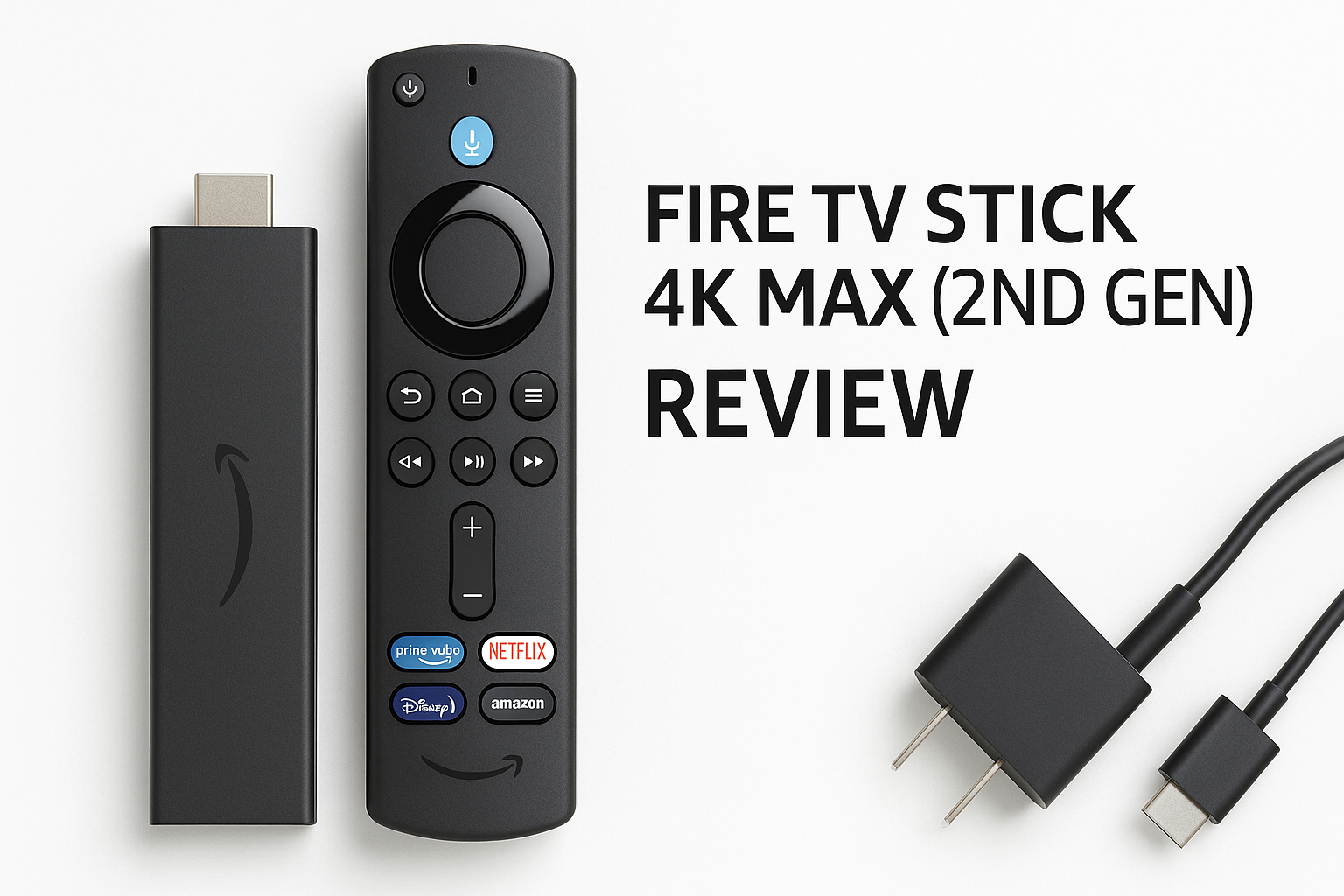
The Amazon Fire TV Stick 4K Max (2nd Gen) is Amazon’s flagship streaming stick, designed for 4K HDR streaming, cloud gaming, and tight Alexa integration in a compact HDMI dongle. Building on previous Fire TV sticks, this model adds Wi‑Fi 6E, 16 GB of storage, AV1 hardware decoding, and Fire TV Ambient Experience for an always-on smart display feel when you’re not watching TV.
For buyers who want a fast, capable 4K streaming device without moving up to a set‑top box, the Fire TV Stick 4K Max aims to deliver high-end performance at a mid-range stick price point around $59.99.
Key Points
- 4K HDR streaming with support for HDR10, HDR10+, HLG, and Dolby Vision.
- Wi‑Fi 6E (tri-band) for more reliable streaming on compatible routers and less congestion in busy wireless environments.
- AV1 hardware decoding, improving efficiency for newer streaming codecs and future‑proofing.
- Quad‑core 2.0 GHz CPU with a modern GPU for snappier navigation and better app performance.
- 16 GB internal storage, double the storage of many lower‑tier Fire TV sticks.
- Fire TV Ambient Experience, turning the TV into a smart display with art, photos, and Alexa widgets when idle.
- Alexa Voice Remote (enhanced) for voice search, TV power/volume control, and quick access buttons.
- Robust app ecosystem: major video, music, and live TV services, plus cloud gaming via Amazon Luna (subscription required).
Experience
Setup and first impressions
Physical setup is straightforward:
- Plug the Fire TV Stick 4K Max into an HDMI port on your TV (or use the included HDMI extender if space is tight).
- Connect the micro‑USB power cable to the included power adapter.
- Power on the TV and follow the on‑screen prompts to connect to Wi‑Fi, sign into your Amazon account, and pair the Alexa Voice Remote.
The initial configuration and software updates take a few minutes, but once done, you’re dropped into the Fire TV interface, which is heavily content‑driven with rows of apps, recommendations, and featured shows.
Interface and performance
Day‑to‑day performance is where the 4K Max distinguishes itself from Amazon’s cheaper sticks:
- Navigation feels quick and responsive, with minimal lag opening apps or moving through menus.
- The upgraded 2.0 GHz quad‑core processor and additional RAM keep multitasking smoother, especially if you tend to switch frequently between apps.
- Voice search via Alexa is generally faster and more accurate than typing via the on‑screen keyboard, especially for long titles, actors, or genres.
Compared to older Fire TV Stick models, scroll hitching and slow app loads are noticeably reduced. For heavy streaming households or anyone who installs a lot of apps, the performance headroom makes a difference.
Streaming quality
The Fire TV Stick 4K Max is built around UHD 4K output at up to 60 fps and supports the main HDR formats (HDR10, HDR10+, HLG, and Dolby Vision) plus Dolby Atmos for compatible content and audio setups.
In practice:
- 4K HDR streams from major services (Prime Video, Netflix, Disney+, etc.) look crisp and saturated provided your TV supports these formats and your internet connection is fast enough.
- SDR upscaling is clean, and 1080p content generally looks sharp on a 4K TV.
- With a compatible AV receiver or soundbar, Atmos soundtracks add clear height and surround effects.
The inclusion of AV1 hardware decoding is a subtle but important upgrade. AV1 is a newer codec that delivers similar quality at lower bitrates compared to H.264/HEVC, and more streaming platforms are gradually adopting it. Hardware support helps ensure smoother playback and better efficiency over time.
Wi‑Fi 6E and connectivity
The stick supports tri‑band Wi‑Fi 6E (802.11ax), which offers:
- Access to the less congested 6 GHz band when used with a Wi‑Fi 6E router.
- Improved throughput and stability for 4K streams, especially in busy households with many devices.
If you’re still on Wi‑Fi 5 or standard Wi‑Fi 6, you won’t get the full benefit of 6E, but the radio remains backward compatible and performs well on older routers too. For users with marginal wireless coverage, Wi‑Fi 6E can reduce buffering and resolution drops when conditions are ideal.
Bluetooth 5.2 is also onboard, allowing pairing of headphones, game controllers, or speakers.
Fire TV Ambient Experience
One of the more visible new features is Fire TV Ambient Experience. When enabled, your TV can display:
- Curated artwork or personal photos.
- Alexa widgets such as calendar, weather, to‑do lists, and smart home shortcuts.
For living rooms or open‑plan spaces, this can turn an otherwise black TV panel into a more useful information hub or digital picture frame. Power usage is higher than a fully off TV, but still relatively modest, and the stick includes a Low Power Mode when idle to help reduce overall energy impact.
Smart home and Alexa integration
Alexa is tightly woven throughout the Fire TV experience:
- Use voice commands to search for shows, open apps, or control playback.
- Control compatible smart home devices (lights, thermostats, plugs) directly from the TV.
- View camera feeds (like video doorbells or security cameras) in full screen or picture‑in‑picture.
If you already use Alexa speakers or Echo devices, the Fire TV Stick 4K Max extends that ecosystem to your largest screen, making it convenient to manage devices and routines without reaching for your phone.
Storage and apps
With 16 GB of internal storage, this model offers more space than lower‑end Fire sticks. That translates into:
- Room for a broader selection of streaming apps, games, and utilities.
- Fewer situations where you need to uninstall something before installing a new app.
Heavy gamers or users sideloading larger apps may still need to manage space periodically, but for typical streaming use, 16 GB is comfortable.
Pros
- Fast and responsive performance for a stick‑class device, thanks to a 2.0 GHz quad‑core CPU and modern GPU.
- Excellent 4K HDR support, including HDR10, HDR10+, HLG, Dolby Vision, and Dolby Atmos audio passthrough.
- Wi‑Fi 6E support delivers more stable 4K streaming on compatible routers and helps future‑proof wireless performance.
- AV1 hardware decoding better aligns the device with emerging streaming standards.
- 16 GB of storage reduces app juggling compared to 8 GB sticks.
- Fire TV Ambient Experience provides a smart display‑like mode with art and widgets when the TV is idle.
- Rich app ecosystem covering major streaming, music, and live TV services, plus Amazon Luna cloud gaming support.
- Tight Alexa integration for voice search, smart home control, and quick information queries.
- Compact, unobtrusive form factor with simple HDMI plug‑in installation.
Cons
- The interface is heavily Amazon‑centric, prioritizing Prime Video and sponsored content, which some users find cluttered.
- No Ethernet port on the stick itself; wired networking requires a separate adapter.
- While improved, 16 GB storage can still feel limiting for users who install many large games or sideloaded apps.
- Full benefits of Wi‑Fi 6E require a compatible router; otherwise, you’re mainly getting a well‑tuned Wi‑Fi 6/5 experience.
- Fire OS can feel more locked‑in compared to open Android TV/Google TV for users who like broad sideloading or alternative app stores.
Verdict
The Amazon Fire TV Stick 4K Max (2nd Gen) is one of the strongest values in Amazon’s streaming lineup. It delivers meaningful upgrades over cheaper Fire TV sticks—faster performance, better wireless capabilities, modern codec support, and more storage—while staying in a compact dongle format that hides behind your TV.
If you:
- Own a 4K HDR TV and want a snappy streaming experience,
- Use or plan to use a Wi‑Fi 6E router, or
- Are already invested in the Alexa ecosystem,
then the Fire TV Stick 4K Max is an easy device to recommend at around $59.99.
Users who just need basic streaming on a 1080p TV and don’t care about Wi‑Fi 6E or Ambient Experience may be satisfied with a cheaper Fire TV Stick. However, for many households, the performance headroom and future‑proofing of the 4K Max make it a smarter long‑term choice, especially as 4K HDR and AV1 streams become more common.