
USB C to 3.5mm Audio Aux Jack Cable (3.3 ft, White) Review: Simple Wired Audio for Modern Phones
Quick Summary
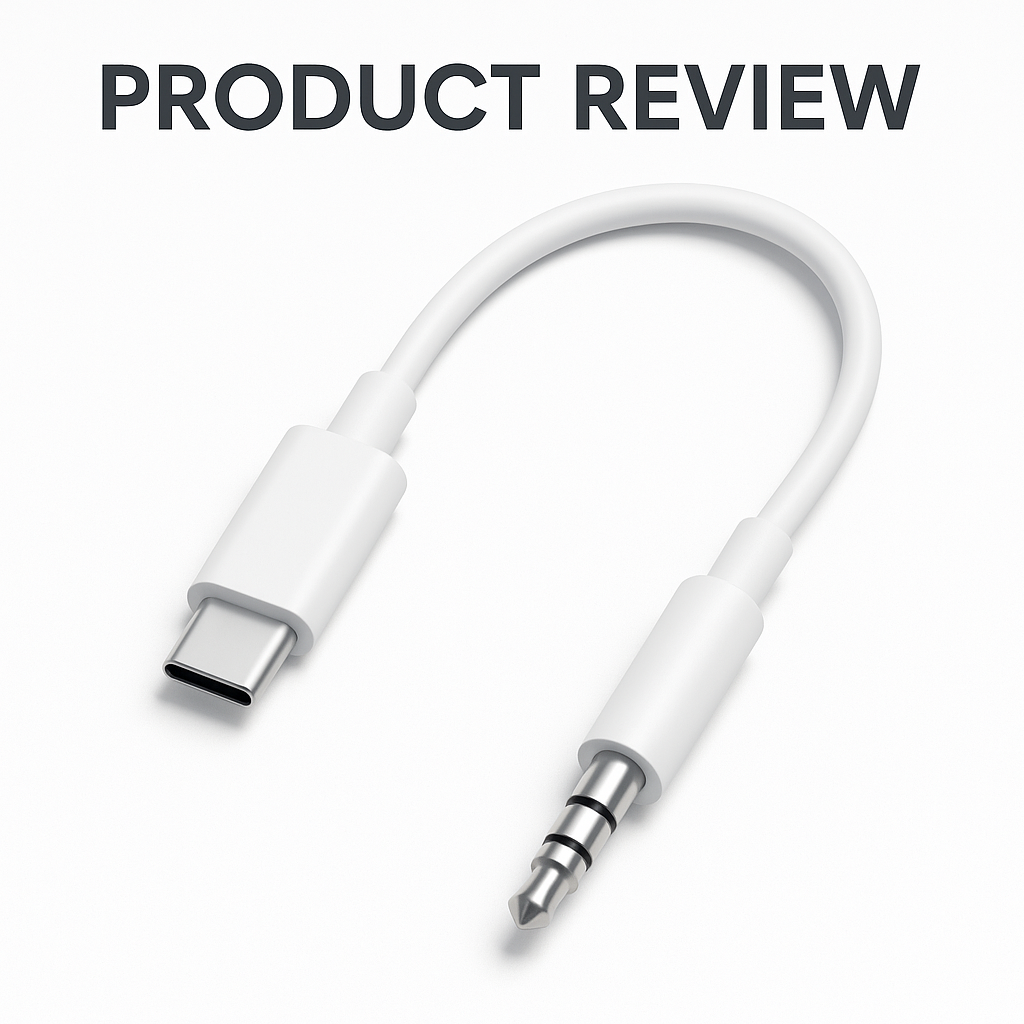
The USB C to 3.5mm Audio Aux Jack Cable (3.3 ft, White) is a straightforward way to connect a modern USB‑C phone or tablet to any device that still relies on a standard 3.5 mm aux input. Instead of juggling separate dongles and aux cords, this cable integrates USB‑C on one end and a 3.5 mm plug on the other, making it convenient for car stereos, portable speakers, desktop speakers, and some wired headphones.
At around $6.97, it targets buyers who want a low‑cost, plug‑and‑play option rather than an audiophile‑grade solution. The 3.3 ft (about 1 m) length is well‑suited to in‑car use and simple desktop setups, and the design is clearly aimed at owners of late‑generation iPhone and Android devices that lack a headphone jack.
Detailed Analysis
Design and Build
- Form factor: USB‑C male on one end, 3.5 mm stereo male on the other, with a fixed 3.3 ft cable between them.
- Color and style: The white finish is visually consistent with many Apple accessories and blends in cleanly with light interiors and workspaces.
- Strain relief: The connector housings typically include short, flexible strain‑relief sections to reduce stress where the cable meets the plugs. This is important for use in cars where the cable is frequently bent or yanked.
- Cable length (3.3 ft): Long enough to reach from a car’s USB‑C port or phone mount to the dashboard aux input or a center‑console jack, while staying short enough to minimize tangling.
Connectivity and Compatibility
This cable is marketed for a wide range of USB‑C phones and tablets, including:
- iPhone 16 / 16 Pro and other recent USB‑C iPhones
- Samsung Galaxy S25 series and other USB‑C Android phones
- USB‑C iPads and some USB‑C laptops or Chromebooks
However, there are a few important technical nuances to keep in mind:
-
Digital vs. analog USB‑C audio:
- Some phones output analog audio directly over certain USB‑C pins; cables like this can tap into that and feed a 3.5 mm jack without needing electronics in the cable.
- Many newer phones, however, output audio digitally only, requiring a tiny DAC (digital‑to‑analog converter) chip inside the adapter. With budget cables, it isn’t always clear whether a DAC is integrated.
-
Direction of audio:
This product is meant to send audio from a USB‑C phone to a 3.5 mm input (car stereo, speaker, etc.). It is not intended to send audio the other way around (for example, from a 3.5 mm output into USB‑C headphones) and will not function as a generic 3.5 mm‑to‑USB‑C adapter. -
Platform quirks:
- Most mainstream USB‑C Android phones and tablets should recognize a compatible analog or DAC‑equipped cable automatically.
- For iPhone 16‑series and later USB‑C iPhones, support depends on Apple’s handling of USB‑C audio accessories. If the cable includes a standards‑compliant DAC and is properly recognized, it should work much like a dongle‑plus‑aux setup.
- Some specialty hardware (certain headphones, game controllers, or docking stations) may expect a different pin configuration and may not work with this cable at all.
Audio Performance
Because this is a budget‑oriented cable, the design target appears to be everyday listening, not reference‑grade sound. Expectations should be framed accordingly:
- General sound quality: For typical uses like streaming music in a car, listening to podcasts, or playing background audio through desktop speakers, a functional cable should deliver clear stereo sound with low background noise.
- Noise and interference: In cars, electrical noise from the alternator or charging systems can sometimes bleed into analog audio. A well‑shielded cable helps, but with slim budget cables, complete immunity to noise is not guaranteed.
- Volume and channel balance: On compatible phones, volume is controlled entirely from the device or the receiving equipment. As long as the connections are firm, there should be no audible imbalance between left and right channels.
If the internal design includes a low‑cost DAC, performance will still be adequate for casual listening but may not match premium dongles designed for high‑impedance headphones or lossless audio.
User Experience
Setup and Everyday Use
- Plug‑and‑play: For supported devices, usage is straightforward: plug the USB‑C end into the phone and the 3.5 mm end into the car stereo or speaker. There is no app to install and no configuration menu to navigate.
- In‑car scenarios:
- The 3.3 ft length makes it easy to run the cable from a phone mount on the dashboard or windshield to an aux port on the head unit or center console.
- The integrated, single‑piece design avoids the extra bulk and failure point of a separate USB‑C dongle plus aux cable.
- At a desk or in a home setup:
- The cable works as a simple bridge from a USB‑C phone or tablet to powered speakers or a compact amplifier with a 3.5 mm input.
- Because it is relatively short, it suits a desktop layout better than a living‑room setup where you might need a longer run.
Reliability Considerations
User experiences with similar low‑cost USB‑C to 3.5 mm cables highlight a few recurring themes:
- Connector durability: Repeated plugging in and out—especially in the car—can stress the USB‑C plug. If you store your phone in a tight compartment, be mindful of bending the connector sharply.
- Cable stiffness: Some inexpensive cables are either too stiff (making them awkward to route) or too soft (more prone to kinking). This product appears to target a flexible, lightweight feel, which is convenient but should still be treated with basic care.
- Inconsistent compatibility: A minority of users find that these cables work on one phone but not another, or that they stop working after an OS update. This is typically due to how each device handles USB‑C analog or digital audio, rather than the cable alone.
Pros
- Simple one‑cable solution to connect USB‑C phones to 3.5 mm aux inputs without an extra dongle.
- 3.3 ft length is practical for car use and compact enough for desks and travel.
- Wide theoretical compatibility across USB‑C devices, including iPhone 16 series, Samsung Galaxy S25, and many other Android phones and tablets.
- Lightweight and easy to pack, ideal as a dedicated car or travel cable.
- Budget‑friendly price point around $6.97, making it low‑risk to keep as a spare.
Cons
- Compatibility is not guaranteed for every USB‑C device, especially where analog vs. digital audio behavior differs.
- Limited information on DAC and internals, so audio quality will likely be adequate but not optimized for audiophiles.
- No length options; users needing a longer or shorter run are limited to the fixed 3.3 ft.
- Potential durability concerns if subjected to frequent bending, sharp angles at the connector, or being slammed in car compartments.
- Single‑purpose design: cannot be used to send audio in the opposite direction (3.5 mm source to USB‑C‑only headphones).
Value Assessment
At approximately $6.97, this USB C to 3.5mm Audio Aux Jack Cable positions itself as a low‑cost, everyday utility cable. The value proposition is strongest if:
- Your primary goal is simple wired audio to an aux input, mainly in a car or on a desk.
- You prefer to avoid carrying a separate USB‑C audio dongle plus an aux cable.
- You have a compatible USB‑C phone and mainly use streaming services, podcasts, or casual listening, rather than critical high‑resolution audio work.
Compared with dedicated USB‑C dongles that include clearly specified DAC chips and support high‑impedance headphones, this cable is more about convenience and minimalism than maximizing audio fidelity. It is best viewed as a practical accessory rather than a performance upgrade.
Final Thoughts
The USB C to 3.5mm Audio Aux Jack Cable, 3.3 ft (White) is a practical pick for users who want to keep wired audio simple with modern USB‑C phones. It offers a clean, compact way to connect an iPhone 16, Samsung Galaxy S25, or similar device to a car stereo, portable speaker, or other 3.5 mm aux input without handling multiple adapters.
Potential buyers should be aware of the broader USB‑C audio landscape: not all phones handle analog and digital audio the same way, and compatibility can vary. If your priority is plug‑and‑play convenience at a low cost, this cable is a reasonable choice. If you need guaranteed compatibility, documented DAC performance, or audiophile‑grade sound, a higher‑end USB‑C audio dongle plus a separate aux cable may be a safer investment.