
JXMOX USB C to 3.5mm Audio Aux Jack Cable (4ft) Review: Simple, Stable Wired Audio for USB‑C Devices
What This Product Is
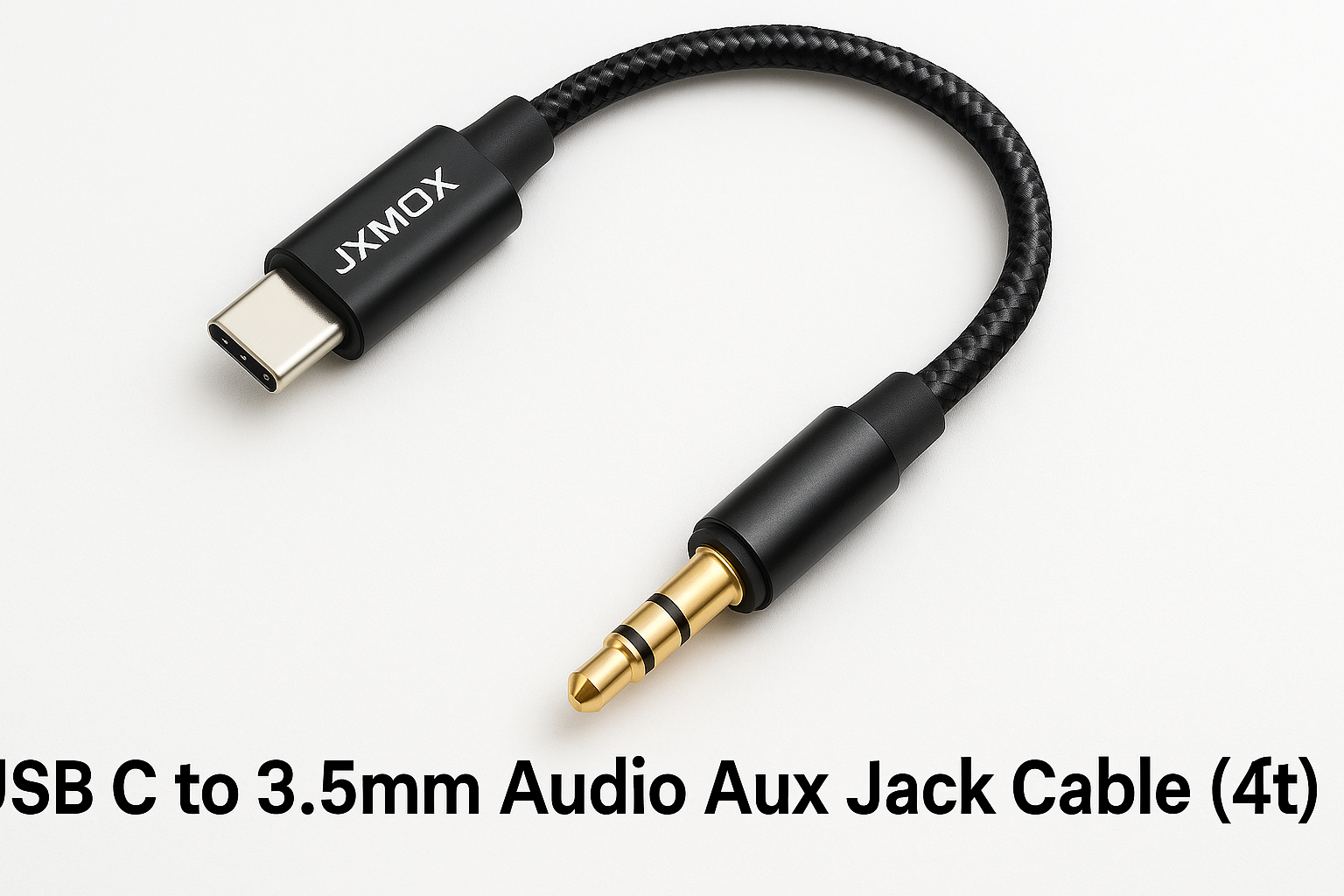
The JXMOX USB C to 3.5mm Audio Aux Jack Cable (4ft) is a male‑to‑male audio cable designed to bridge newer USB‑C devices and traditional 3.5mm inputs. On one end you get a USB‑C plug for phones, tablets, or laptops that have dropped the headphone jack; on the other, a standard 3.5mm plug for car stereos, speakers, soundbars, or wired headphones.
At about 4 feet long, it’s built for everyday use in scenarios like:
- Plugging an iPhone 17/16/15 Pro/Pro Max or iPhone 17 Air into a car’s AUX‑in
- Connecting a Samsung Galaxy S25/S24/S23/S22/S21 or Note 20 to a home or office speaker
- Using a Pixel 9/8 or USB‑C iPad Pro with wired headphones or desktop speakers
Internally, the cable includes the electronics needed for USB‑C audio output (rather than being just a passive wire), so it’s intended to work with most mainstream USB‑C phones and tablets that support audio via the port.
In many listings this cable sits around $6.98, which positions it as a budget‑friendly, everyday accessory rather than an audiophile‑grade solution.
Why It Matters
As more devices move exclusively to USB‑C, simple wired audio options have become harder to find. A lot of people still rely on:
- Older but perfectly functional car stereos with only a 3.5mm AUX input
- Legacy powered speakers, bookshelf systems, or soundbars
- Favorite wired headphones that use a 3.5mm plug
While Bluetooth is widespread, it’s not always ideal. Cars may have unreliable wireless connections, some office environments restrict Bluetooth, and latency or compression can be an issue for critical listening. A direct analog cable like the JXMOX model provides:
- Predictable, low‑latency audio for calls, navigation prompts, podcasts, and music
- No charging or pairing steps—just plug in and play
- An inexpensive way to keep using existing audio gear instead of upgrading everything to wireless
This cable exists to solve exactly that compatibility gap, especially for people who upgraded to a USB‑C‑only phone but don’t want to replace their car or speakers.
Key Advantages
1. Broad Device Compatibility
The JXMOX cable is marketed for a wide range of USB‑C devices, including:
- iPhone 17 / 16 / 15 series and iPhone 17 Air
- Samsung Galaxy S25, S24, S23, S22, S21, Note 20
- Google Pixel 9, 8 and earlier Pixel USB‑C models
- USB‑C iPad Pro and many USB‑C tablets or laptops
Because the cable handles USB‑C audio output, it’s more flexible than basic “charging‑only” USB‑C cables or passive adapters that rely on the phone having its own analog output on the port.
2. Simple, Plug‑and‑Play Design
There’s no app, driver, or configuration needed. You:
- Plug the USB‑C end into your phone or tablet
- Plug the 3.5mm end into your car stereo, speakers, or headphones
- Select AUX (if needed) and start playback
For everyday tasks like playing navigation directions over your car speakers or streaming music from your phone, this simplicity is a real plus.
3. Practical 4‑Foot Length
Four feet is long enough to:
- Reach from a phone mount or cup holder to an AUX port on most dashboards
- Connect a tablet on a desk to nearby speakers without stretching the cable
- Use a phone comfortably in hand or on a stand while plugged into wired headphones
At the same time, it’s short enough to minimize tangling and excess slack in a car or on a workspace.
4. Integrated Cable Instead of a Short Dongle
Instead of combining a separate USB‑C‑to‑3.5mm adapter with a regular AUX cable, this product integrates everything into one line. That means:
- Fewer connection points to loosen or introduce noise
- Less bulk hanging off the USB‑C port
- One item to keep track of instead of two
For car use in particular, minimizing extra adapters and joints tends to improve reliability.
5. Budget‑Friendly Option
With a typical street price around $6.98, this cable is positioned as a low‑risk purchase. That makes it easy to pick up as a spare or keep one permanently in the car, office, or travel bag.
Key Limitations
1. No Charging or Power Pass‑Through
This is strictly an audio‑only cable:
- You cannot charge your device while using it
- There’s no USB data or video transfer
If you need to listen and charge at the same time, a multi‑port USB‑C audio + charging adapter would be a better fit.
2. Direction‑Specific Use
The cable is designed to send audio from a USB‑C device to a 3.5mm input. It will not work in reverse—for example:
- You can’t use it to convert a 3.5mm output (like an older MP3 player) into USB‑C headphones
- You can’t treat the USB‑C plug as a generic input for recording devices
Anyone trying to solve the opposite problem (3.5mm source to USB‑C‑only headphones) will need different hardware.
3. No In‑Line Controls or Microphone
This cable carries audio but does not add an in‑line remote or microphone. Limitations include:
- No play/pause, track controls, or volume buttons on the cable
- If you plug into a car AUX port, phone calls typically route through the car system (if supported) or the phone’s own mic, not via this cable
That’s fine for basic listening, but less convenient if you’re used to headset‑style controls.
4. Not an Audiophile‑Grade Interconnect
For most users, audio quality will be more than adequate for streaming, podcasts, and navigation. However:
- Construction and materials are aimed at everyday use, not ultra‑low‑capacitance or studio‑grade performance
- Sound quality is still limited by the phone’s own audio implementation and the car or speaker’s input stage
If you’re chasing reference‑level fidelity, a dedicated USB DAC and higher‑end analog cables would be more appropriate.
5. Potential Compatibility Edge Cases
Although it supports a wide range of devices, USB‑C audio implementations can differ. Some less common phones or tablets may:
- Limit external audio output modes
- Require specific USB‑C audio profiles
Most mainstream iPhone, Samsung, Google, and iPad models should work as advertised, but there’s always a small chance of quirks with niche or very budget devices.
Who It’s For
This cable is a good match if you:
- Use a USB‑C phone or tablet in a car with only a 3.5mm AUX input and want a simple, reliable connection for navigation, calls, and music
- Prefer wired audio for stability or security reasons and want to avoid Bluetooth pairing or interference
- Own multiple USB‑C devices (iPhone 17/16/15 series, Samsung Galaxy S25/S24/S23/S22/S21, Pixel 9/8, iPad Pro) and want a single cable that works across them
- Need an inexpensive, leave‑it‑there cable for a car, office, dock, or bedside setup
- Listen mostly to streaming audio, podcasts, and calls, not critical studio work
If those points describe your usage, the JXMOX cable offers a straightforward way to keep using existing audio equipment.
Who Should Skip It
You may want to look elsewhere if you:
- Need to charge and listen simultaneously from a single USB‑C port (consider a USB‑C audio + charging adapter instead)
- Want in‑line controls or a built‑in microphone for calls and media control
- Are trying to convert 3.5mm output into USB‑C headphones—this cable won’t solve that reverse‑direction problem
- Require professional‑grade audio quality, ultra‑low noise, or balanced connections
- Use a device with unusual or vendor‑locked USB‑C audio behavior, where a brand‑specific adapter may be more reliable
Final Recommendation
The JXMOX USB C to 3.5mm Audio Aux Jack Cable (4ft) is an uncomplicated, affordable solution for bringing wired audio back to USB‑C‑only phones and tablets. It’s especially well‑suited for car use and for anyone who wants a dependable, low‑friction way to plug modern devices into older 3.5mm‑only audio gear.
It doesn’t try to be everything—it won’t charge your device, add mic controls, or replace a high‑end DAC—but for its core job of providing a stable, plug‑and‑play audio link at around $6.98, it’s a practical and sensible pick. If you’ve upgraded to a USB‑C iPhone, Galaxy, Pixel, or iPad Pro and just want your AUX port to keep working, this cable is worth considering.