
Apple AirTag (2nd Generation) Review: A Smarter, Louder Tracker for Everyday Essentials
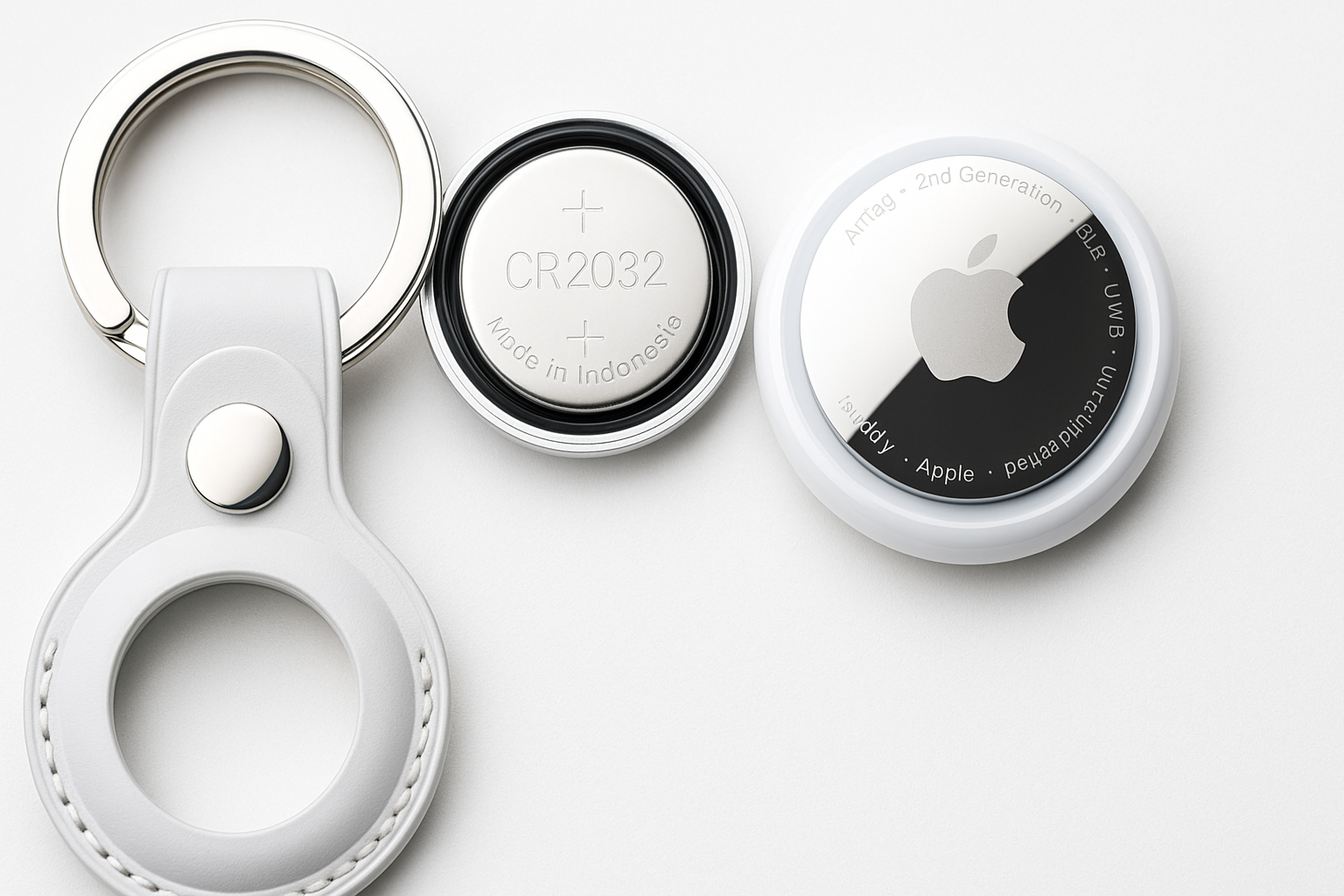
Quick Summary
The Apple AirTag (2nd Generation) is Apple’s refreshed Bluetooth and Ultra Wideband (UWB) tracker designed to help you locate everyday items through the Find My app. It retains the compact coin-like design of the original but adds a second-generation UWB chip, a significantly louder built‑in speaker, and extended Precision Finding range—up to roughly 1.5x farther than the first version under ideal conditions. It also leans more heavily into Apple’s environmental goals with higher recycled material content.
If you are already in Apple’s ecosystem and need a reliable way to track keys, wallets, luggage, or backpacks, this model is a strong, incremental upgrade. On compatible iPhones and Apple Watches, Precision Finding now works at longer distances with clearer directional guidance, and the louder alerts make it easier to locate an AirTag hidden in cushions or bags.
For buyers considering it on Amazon, the single-pack offering is positioned around $24.00, reflecting a premium over many third‑party Bluetooth trackers in exchange for deeper Apple ecosystem integration and enhanced privacy protections.
Detailed Analysis
Design and Build Quality
The AirTag (2nd Generation) maintains the small, circular form factor of its predecessor with a diameter of 1.26 inches (31.9 mm) and a height of 0.31 inch. It is lightweight at about 11.8 grams, so it adds minimal bulk to keychains or slipped into a wallet sleeve.
The enclosure now uses a higher proportion of recycled materials, including recycled plastic and metals, in line with Apple’s broader carbon‑neutrality goals. The finish is still clean and understated, though, as with the original, the shiny surfaces may be prone to cosmetic scuffing over time if left unprotected in pockets or bags with keys and coins.
The tracker is rated IP67 for water and dust resistance, meaning it can withstand immersion in up to 1 meter of water for up to 30 minutes. This is adequate for common mishaps such as drops into puddles, spills, or short-term exposure to rain.
Hardware and Connectivity
The key hardware change is Apple’s second‑generation Ultra Wideband chip, which powers the expanded Precision Finding capabilities when paired with compatible devices. This hardware upgrade allows more accurate distance and direction information and a longer effective range compared with the first-generation AirTag.
Connectivity includes:
- Bluetooth for general proximity detection and communication with nearby Apple devices on the Find My network.
- Second‑generation UWB for Precision Finding, which provides on‑screen arrows, distance readouts, and haptic feedback to guide you toward the AirTag.
- NFC for Lost Mode: if someone finds your AirTag, they can tap it with an NFC‑capable smartphone to see a contact message you have configured.
Battery and Maintenance
Like the original, the AirTag (2nd Generation) uses a user‑replaceable CR2032 coin cell battery. Apple rates the battery life at roughly a year under typical use, which includes periodic sound playback and Precision Finding usage. Actual longevity will depend on how often you trigger audible alerts and how frequently the device is located over the network.
Replacing the battery involves twisting and removing the cover, swapping in a new CR2032 cell with the correct orientation, and reseating the cover. This process remains straightforward, though users should ensure proper sealing to maintain water resistance.
Compatibility and Requirements
As a newer product, the AirTag (2nd Generation) has stricter minimum software requirements than the original. It requires:
- An Apple ID and iCloud account.
- An iPhone with a relatively recent version of iOS (or an iPad with recent iPadOS) to set up and manage the tracker.
- For full Precision Finding with extended range, you need an iPhone model equipped with Apple’s newer UWB chip (for example, recent iPhone and Apple Watch models that explicitly support the 2nd‑generation AirTag’s expanded Precision Finding feature).
Older iPhones that support the Find My network but lack the latest UWB hardware can still show approximate locations based on Bluetooth and network updates, though they may not benefit from the full directional guidance and extended range.
Sound and Alerts
One of the most notable practical improvements is the louder integrated speaker, which Apple rates as being up to about 50% louder than the original AirTag. In real‑world terms, this tends to make a difference in noisy environments or when the AirTag is buried in soft materials like couch cushions or clothing.
The Find My app allows you to trigger a sound on the AirTag, while nearby compatible Apple Watches can also initiate playback and Precision Finding. The increased volume addresses a common complaint about the first generation, where the beep could be hard to hear unless you were very close.
Precision Finding and Range
Precision Finding builds on UWB to provide an on‑screen interface that shows distance, direction, and contextual cues (e.g., arrows, haptics) as you move toward your lost item. With the 2nd‑generation UWB chip, Apple advertises up to 1.5x greater Precision Finding range under ideal conditions, which translates to more flexibility before you must resort to audible alerts alone.
The range improvement also benefits scenarios where there are obstacles or walls. While physics and building layouts still limit signal propagation, users can often pick up a directional lock from farther away than before, especially in open indoor spaces or moderately obstructed environments like large homes or offices.
Software Experience and Find My Integration
Setup remains one of AirTag’s biggest advantages. Bringing the AirTag close to your iPhone triggers a one‑tap pairing flow, where you assign a name (like “Keys,” “Wallet,” or “Backpack”) and link it to your Apple ID. From then on, the item appears in the Items tab in the Find My app.
Key software features include:
- Live Precision Finding on compatible iPhone and Apple Watch models.
- Play Sound to trigger the louder built‑in speaker when nearby.
- Lost Mode, which lets you mark an item as lost, display a contact message, and be notified when it’s detected by the Find My network.
- Item sharing with up to a small group of people, allowing shared items—such as car keys or a family bag—to be tracked by multiple Apple IDs.
Apple also continues to enhance privacy and anti‑stalking features, including alerts when an unknown AirTag appears to be traveling with you and tools for both iOS and Android users to detect unwanted trackers.
User Experience
Everyday Use Cases
In daily use, the AirTag (2nd Generation) is well suited for:
- Keychains: Pairing with a key ring accessory turns it into a durable key finder, making misplaced keys much easier to locate.
- Wallets and bags: When paired with a compatible wallet sleeve or simply slipped into a small pocket, it provides reliable tracking for wallets, handbags, or backpacks.
- Travel: Placing an AirTag in luggage or travel bags can help confirm whether your bags are on the same journey as you, with airport‑based Find My devices updating locations periodically.
- Shared household items: Items like car keys or a shared toolbox can be tracked by multiple family members when sharing is enabled.
Setup and Learning Curve
For existing Apple users, setup is almost frictionless. The AirTag appears on your device as soon as it is in range and powered on, and the pairing wizard guides you through naming and assigning it. The Find My interface is already familiar to most iPhone owners, reducing the learning curve.
Precision Finding on compatible devices is highly intuitive: you follow the on‑screen arrows and distance estimates until you are close enough to spot or hear the tracker. The improved range makes the guidance feel more continuous rather than cutting out at short distances.
Reliability and Network Coverage
As with the first generation, the AirTag (2nd Generation) leverages Apple’s extensive Find My network, which consists of millions of Apple devices that can passively detect nearby AirTags and relay their encrypted locations back to their owners. In dense urban or suburban settings, this typically translates to frequent location updates and reasonably accurate maps.
In more rural or sparsely populated areas, or in locations with fewer Apple devices, update intervals can lengthen, and you may rely more on your own device’s connectivity to find the AirTag when nearby. Nevertheless, the combination of improved Bluetooth and UWB hardware makes local searching more responsive once you are in the vicinity.
Pros
- Improved Precision Finding range compared with the first‑generation AirTag, enabling directional guidance from farther away on compatible devices.
- Significantly louder built‑in speaker, making it easier to hear the AirTag in noisy environments or when it is hidden.
- Deep integration with Apple’s Find My network, which provides broad coverage in areas with a high density of Apple devices.
- Simple, one‑tap setup and familiar Find My interface for existing iPhone and iPad users.
- User‑replaceable CR2032 battery with an expected life of around a year under normal usage.
- Compact, lightweight design suitable for keys, wallets, bags, and small accessories.
- Enhanced environmental profile with a higher percentage of recycled materials and fully fiber‑based packaging.
- Robust privacy and anti‑stalking features, including alerts for unknown AirTags traveling with users and support for Android detection tools.
Cons
- Apple‑centric ecosystem: Full functionality, especially Precision Finding at extended range, is largely limited to recent Apple devices; Android users get only limited detection capabilities, not the full tracking experience.
- Accessory dependence: To attach an AirTag to many items (like keys or pets’ collars), you still need separate key rings, loops, or mounts, which add cost.
- Premium pricing: Even at around $24.00 for a single unit, it remains pricier than many third‑party Bluetooth trackers.
- Limited use in low‑Apple‑density regions: In areas with few Apple devices, the Find My network’s crowd‑sourced location updates can be slow or infrequent.
- No GPS: As with the first generation, the AirTag relies on nearby devices for location updates and does not contain its own GPS module, which may disappoint users expecting standalone real‑time tracking.
Value Assessment
From a value perspective, the AirTag (2nd Generation) targets buyers who prioritize seamless integration, dependable performance, and privacy features over the lowest possible cost. When purchased as a single unit on Amazon at approximately $24.00, it is priced above many generic Bluetooth trackers but offers a notably better user experience for iPhone and Apple Watch owners.
The extended Precision Finding range can justify an upgrade for users who frequently misplace items in larger homes, offices, or multi‑level buildings, and the louder speaker directly addresses one of the most practical complaints about the original model. Long‑term costs remain reasonable thanks to standard coin cell batteries rather than proprietary charging solutions.
If you already own first‑generation AirTags that are performing well and primarily use them in small spaces, the upgrade is more incremental than transformative. However, for first‑time buyers in the Apple ecosystem, the 2nd‑generation model is clearly the better choice and is likely to remain supported for years.
Final Thoughts
The Apple AirTag (2nd Generation) refines an already capable product, focusing on meaningful improvements in range, audibility, and sustainability rather than dramatic redesigns. It is a straightforward recommendation for iPhone users who want a reliable, well‑integrated way to keep track of important items and are comfortable paying a modest premium over budget trackers.
If you frequently misplace keys or bags, travel regularly, or manage shared household items, this updated AirTag offers a balanced mix of convenience, performance, and privacy that aligns well with Apple’s broader ecosystem. While its usefulness depends in part on living or traveling in areas with good Apple device density, for many users it will be one of the simplest and most effective trackers available.
For readers considering the Amazon listing for the Apple AirTag (2nd Generation) key finder and item locator, the decision largely comes down to your existing devices. If you are invested in Apple hardware and want a tracker that “just works” with minimal configuration, the AirTag (2nd Generation) delivers on that promise and makes a strong case for its asking price of around $24.00.