
Fitbit Inspire 3 Review: A Compact, Entry-Level Health & Fitness Tracker Focused on the Basics
What This Product Is
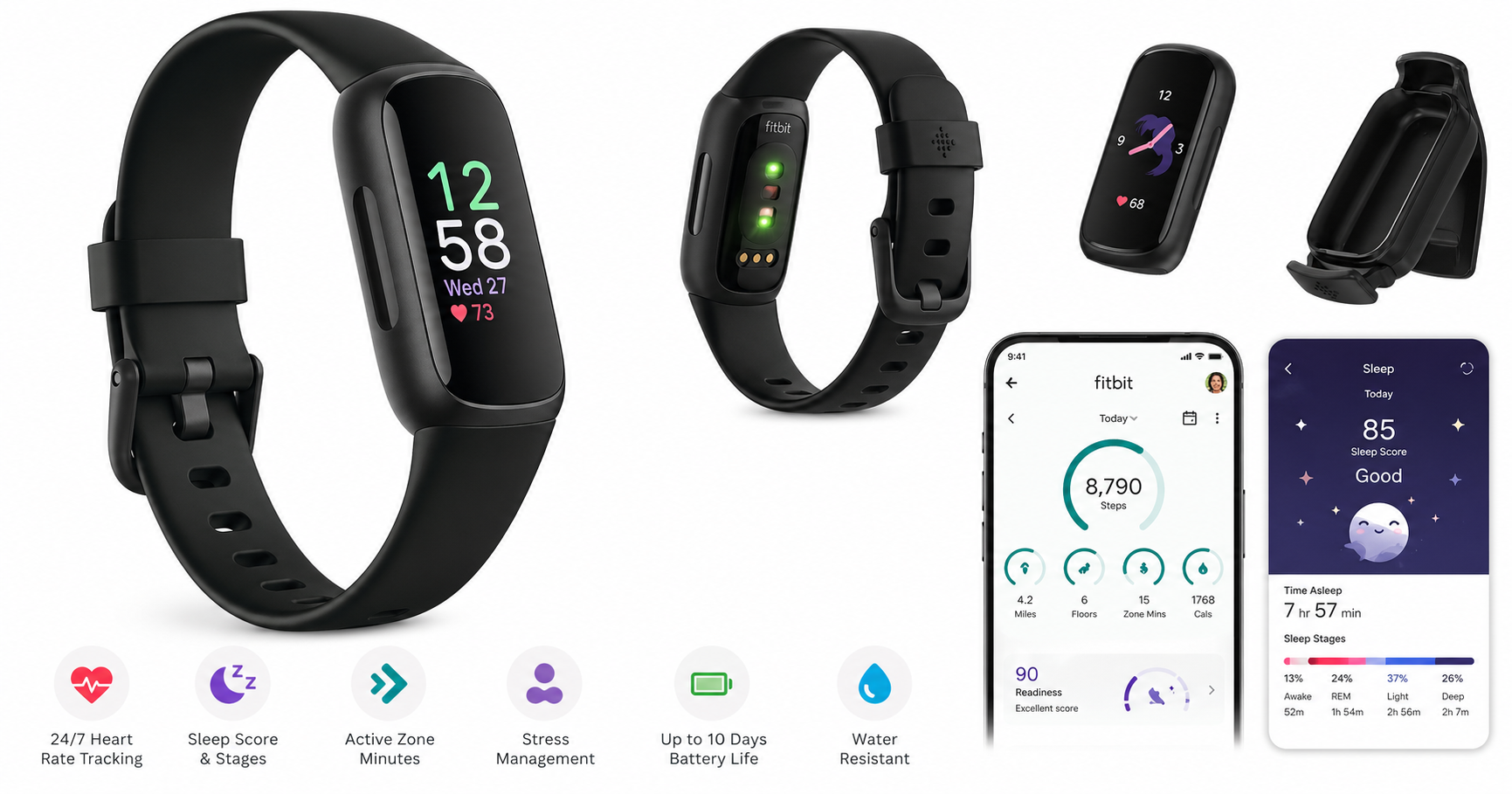
The Fitbit Inspire 3 Health & Fitness Tracker in Midnight Zen/Black is Fitbit’s small, band-style tracker aimed at users who want essential health and activity features without a full smartwatch.
Key characteristics include:
- Slim, lightweight band form factor with a removable tracker module and silicone strap (S and L bands included).
- Color AMOLED display, the first in the Inspire line, designed for better readability while keeping the device compact.
- 24/7 optical heart-rate monitoring, plus basic stress and sleep tracking integrated into Fitbit’s scoring systems.
- Activity tracking for steps, distance (via connected GPS), Active Zone Minutes, calories burned, and over 20 exercise modes.
- Sleep tracking with Sleep Score, sleep stages (light, deep, REM), and optional SmartWake alarms.
- Water resistance to typical swim/shower depths (suitable for pool use, but not for high-velocity water sports).
- A multi-day battery often reaching about a week in mixed use, depending on screen and notification settings.
On Amazon (product code B0B5F9SZW7), the Inspire 3 is positioned as an affordable entry point into Fitbit’s ecosystem at around $66.45.
Why It Matters
For many people, a full-featured smartwatch can be overkill—larger on the wrist, more complex to configure, and often requiring daily charging. The Fitbit Inspire 3’s role is to:
- Cover core health metrics like heart rate, sleep, and basic activity.
- Provide light guidance on stress and readiness, nudging you toward healthier daily habits.
- Deliver this in a small, comfortable form factor that you can wear all day and night.
Its color display and enhanced sleep and SpO2 metrics elevate it over older Inspire models while keeping costs and complexity relatively low compared to premium wearables. If you want to understand your overall movement, sleep quality, and general cardiovascular trends without diving into advanced training metrics, this tracker hits that middle ground.
Key Advantages
1. Compact, Comfortable Design
- The slim profile and light weight make the Inspire 3 easy to forget on your wrist, even during sleep.
- The Midnight Zen/Black aesthetic is subtle and neutral, blending well with both casual and office wear.
- The tracker module pops out, allowing use with alternative bands and clip accessories (sold separately), which can be appealing if you want to wear it discretely.
2. Color AMOLED Display at Entry Level
- Compared with earlier Inspire models, the color AMOLED screen is a notable upgrade, improving visibility for stats, workout zones, and notifications.
- Despite the upgrade, most reviewers find that battery life remains strong, especially with always‑on display disabled.
3. Solid Core Health and Activity Tracking
- 24/7 heart-rate monitoring supports resting heart rate trends, workout intensity zones (fat burn, cardio, peak), and calorie estimates.
- Step and activity tracking are broadly in line with other mainstream wearables; it’s built to capture everyday movement and basic exercise sessions rather than lab-grade metrics.
- SpO2 and sleep tracking give a reasonable overview of sleep stages and overnight oxygen saturation trends (not for medical diagnosis, but helpful for wellness insights).
- Stress Management and Daily Readiness scores (some gated behind Fitbit Premium after the trial) help translate raw data into simple, actionable guidance: whether you should rest more or push harder.
4. Long Battery Life
- In typical use, many users report about a week or more between charges, depending on features like always‑on display and notification volume.
- This makes the Inspire 3 a good choice if you dislike constant recharging or routinely forget to plug in devices.
5. Fitbit App and Ecosystem
- The Fitbit app remains one of the most user‑friendly health dashboards, with intuitive graphs for steps, sleep, heart rate, and trends over time.
- Integration with Android and iOS for call, text, and app notifications works reasonably well once set up (though experiences can vary by phone model and OS version).
- For those who opt into Fitbit Premium, there are additional insights, historical data, and guided programs layered on top.
6. Accessible Price Point
- The Inspire 3 typically sits in the budget to lower‑midrange bracket of fitness trackers, making it approachable for first‑time buyers.
- It’s often available at or below $66.45, undercutting many full-fledged smartwatches while still providing robust health metrics.
Key Limitations
1. No Built‑In GPS
- The Inspire 3 relies on your phone’s GPS (connected GPS) for route maps and distance accuracy during outdoor runs, walks, or rides.
- If you prefer to exercise without carrying your phone, or if you rely heavily on precise route tracking, this can be a dealbreaker.
2. Small Screen and Basic Interface
- Even with the color upgrade, the screen is still narrow and compact. Reading detailed stats or longer notifications on the move can be challenging.
- Scrolling and navigating menus can feel a bit cramped, especially compared to larger smartwatches.
3. Dependence on Fitbit App and Premium
- The most useful long‑term insights—richer sleep analytics, historical stress and readiness trends—are partly gated behind Fitbit Premium after the initial free trial.
- If you do not intend to pay for a subscription, you still get solid basics, but some of the more advanced scoring and long‑term trend features become limited.
4. Mixed Reports on Reliability and App Experience
- Community feedback highlights occasional issues with syncing, notifications, and, in some cases, display failures or firmware update problems.
- While not universal, this underlines the importance of keeping firmware and the app updated, and being prepared to contact support if you hit recurring bugs.
5. Not for Detailed Sports Training
- Runners, cyclists, or swimmers seeking advanced training metrics (like cadence, pace alerts, VO2‑max, or structured intervals) will find the Inspire 3 relatively basic.
- You can track workouts and heart‑rate zones, but it’s not a replacement for a dedicated sports watch.
Who It’s For
The Fitbit Inspire 3 is best suited to:
- Beginners to fitness tracking who want an easy, low‑profile way to monitor steps, heart rate, and sleep.
- Everyday users focused on general wellness, stress, and sleep rather than performance athletics.
- People who dislike bulky watches and prefer a slim band they can comfortably wear 24/7.
- Budget‑conscious shoppers who want reputable brand hardware, strong app support, and a reasonable feature set without paying for a flagship smartwatch.
- Users invested in the Fitbit ecosystem, or those with friends/family on Fitbit who want to share step challenges or activity stats.
If your goals are to move more, sleep better, and gain a simple overview of your health trends, the Inspire 3 delivers a balanced combination of features and cost.
Who Should Skip It
You may want to look elsewhere if:
- You need built‑in GPS for independent route tracking during runs or rides.
- You are a serious endurance athlete or data‑driven trainer and rely on advanced metrics like VO2‑max estimates, detailed interval analysis, or training load.
- You prefer large, highly readable screens for reading notifications, messages, or detailed stats at a glance.
- You strongly dislike subscription models and want all metrics and long‑term historical data fully unlocked without ongoing fees.
- You’ve previously had issues with Fitbit/Google account integration or prefer ecosystems from other brands (Garmin, Apple, etc.).
In these scenarios, a more advanced smartwatch or sports watch, though typically more expensive than $66.45, may serve you better in the long run.
Final Recommendation
The Fitbit Inspire 3 Health & Fitness Tracker is a well-rounded, compact wearable that successfully covers the essentials: 24/7 heart-rate tracking, reliable step and activity data for everyday use, and informative sleep and stress metrics—now with a color display and multi‑day battery life.
It’s not a power user’s device and doesn’t pretend to be. Instead, it excels as an entry-level, wear‑all‑day band for people who want insight into their health without the size, complexity, or cost of a full smartwatch. If you are comfortable using the Fitbit app, don’t need built‑in GPS, and value comfort plus battery life, the Inspire 3 remains an appealing option at around $66.45.
For first‑time fitness tracker buyers, casual exercisers, and anyone who prioritizes simplicity and comfort, the Inspire 3 is easy to recommend as a practical, budget‑friendly starting point.