
Apple AirPods 4 Review: Refined Comfort, Better Audio, and a Seamless iPhone Experience
Introduction
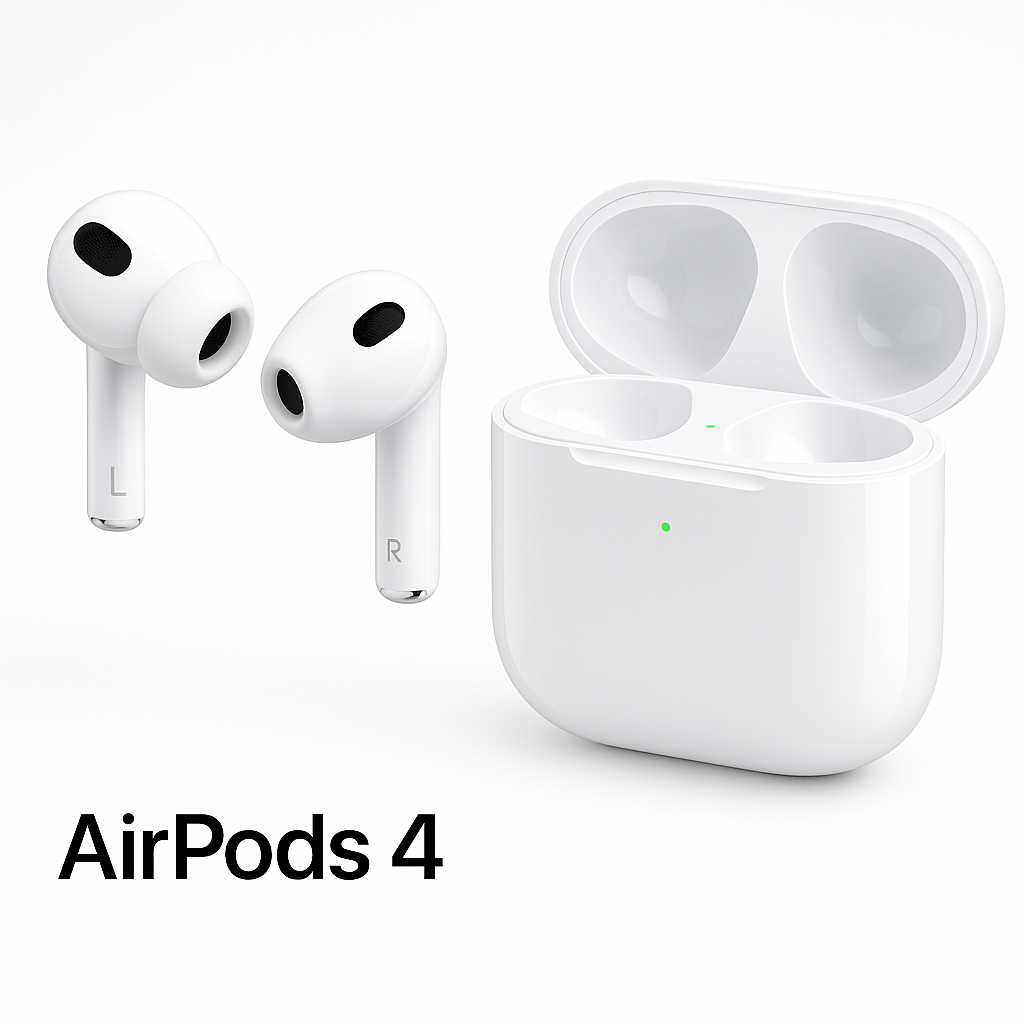
Apple’s AirPods line has become a default choice for many iPhone users, and the Apple AirPods 4 Wireless Earbuds are positioned as a mainstream option that balances convenience, comfort, and modern audio features. With a refined design, H2 chip, Personalized Spatial Audio, and a USB-C charging case, AirPods 4 aim to improve on the familiar formula without adding much complexity.
In this review, we look at how the AirPods 4 perform in everyday use, what’s new compared with earlier generations, and who will benefit most from this update.
Product overview and key features
The Apple AirPods 4 Wireless Earbuds are in-ear Bluetooth headphones designed primarily for iPhone, iPad, and Mac users. They focus on quick pairing, stable connectivity, and integration with Apple’s ecosystem.
Key features:
-
Redesigned, more comfortable fit
AirPods 4 use a refined contour with a shorter stem and more ergonomic shape, intended to improve comfort during long listening sessions while maintaining a secure fit for commuting, walking, or light workouts. -
Apple H2 chip
At the core of AirPods 4 is Apple’s H2 chip, which provides efficient Bluetooth connectivity, improved audio processing, and better power management. It also enables advanced computational audio features like Personalized Spatial Audio and enhanced voice isolation. -
Personalized Spatial Audio with dynamic head tracking
Using the TrueDepth camera on a compatible iPhone, you can create a personal profile that tunes the Spatial Audio experience to your ears. Dynamic head tracking then adjusts sound positioning as you move your head, creating a more immersive, theater-like experience for movies, TV shows, games, and some music content. -
Improved sound and call quality
AirPods 4 are tuned for clearer mids and highs with balanced bass suitable for everyday listening. The H2 chip and microphones support voice isolation, reducing background noise so your voice remains easier to hear on calls in noisy environments. -
Sweat and water resistance
Both the earbuds and charging case are designed to be sweat and water resistant, making them appropriate for gym use, running, or getting caught in light rain. While they are not intended for swimming, the added durability is reassuring for active users. -
USB-C charging case
The included USB-C charging case replaces older Lightning-based cases, aligning with Apple’s broader transition to USB-C. This simplifies charging if you already have USB-C cables for newer iPhones, iPads, or Macs. -
Battery life up to 30 hours
Combined with the charging case, AirPods 4 can deliver up to 30 hours of total listening time under typical conditions. Individual listening time per charge will vary depending on volume and usage, but for most users this translates to several days of mixed use before needing to plug in the case. -
Effortless setup and ecosystem integration
Opening the case near an iPhone triggers a quick-setup animation, and pairing is tied to your Apple ID. Once set up, AirPods 4 can automatically switch between your iPhone, iPad, Mac, and Apple Watch associated with the same account. Hands-free “Siri” or “Hey Siri” support lets you control playback, adjust volume, or check notifications using voice commands.
From a value perspective, AirPods 4 typically sit in the mid-to-upper tier of consumer earbuds. If you are purchasing them from Amazon at around $99.00, you are paying for tight Apple integration, solid sound quality, and an overall polished experience rather than niche audiophile tuning or highly customizable software.
Performance and user experience
Setup and connectivity
For iPhone users, setup is close to frictionless. You open the case near your phone, tap the on-screen prompt, and AirPods 4 are paired. The connection is then shared across your Apple devices signed into the same iCloud account.
Bluetooth stability is generally strong, with few dropouts when your phone is in a pocket or bag. Automatic device switching can be convenient if you frequently move between a Mac, iPad, and iPhone, although some users may prefer to manage connections manually for more predictability.
Comfort and fit
The redesigned shape and shorter stems make AirPods 4 feel less obtrusive while worn. The lighter, more ergonomic design helps reduce ear fatigue over time.
For most users with average ear shapes, the fit should be stable enough for daily commutes, office use, and light exercise. As with any one-shape-fits-most earbuds, people with either unusually small or large ears might experience a less secure fit or need occasional adjustments.
Sound quality
AirPods 4 prioritize a balanced sound signature suitable for a broad range of content:
- Music: Clear mids and highs, with bass that is present but not overpowering. They handle mainstream genres—pop, rock, acoustic, podcasts—very well.
- Movies and TV: When used with Spatial Audio content, you get a more immersive soundstage where dialogue and effects feel better separated.
- Podcasts and calls: Voices are rendered clearly, which is important for spoken content.
They are not tuned for heavy bass enthusiasts or studio-monitor-level accuracy, but most everyday listeners will find the sound quality more than satisfactory.
Personalized Spatial Audio
Personalized Spatial Audio is one of the signature features of AirPods 4. After creating a profile via your iPhone’s camera, audio is subtly recalibrated for your ear shape. In supported apps and content, spatial mixes place instruments and effects more precisely around you.
Dynamic head tracking adds an extra layer of immersion by anchoring the sound field relative to your device. For movies and some games, this can make the experience feel closer to wearing a compact surround-sound system than traditional stereo earbuds.
Call quality and voice isolation
The H2 chip supports advanced microphone processing and voice isolation. In practice, this means:
- Your voice remains clearer to the person on the other end of the call.
- Background noise like traffic, air conditioners, or chatter is reduced, though not completely eliminated.
For frequent callers, remote workers, or students attending online meetings, this improvement over older models can be significant, especially in noisy environments.
Battery life and charging
With up to 30 hours of total listening time with the case, AirPods 4 are well-suited for daily use without constant charging. Many users can get several days of mixed music, calls, and podcasts before needing to charge the case.
The switch to USB-C is practical if you have newer Apple devices or laptops, allowing one cable to charge multiple products. Quick top-ups are straightforward—plug in the case for a short time and you regain several hours of listening.
Everyday usability
Key usability highlights include:
- Quick-press stem controls for play/pause, track skipping, and calls.
- Siri integration for voice commands without touching your phone.
- Automatic ear detection pausing playback when you remove an earbud and resuming when you put it back.
- Find My support to help locate misplaced earbuds or the case.
The overall experience is intentionally simple: AirPods 4 are designed to “disappear” into your routine rather than ask you to manage complex settings.
Pros and cons
Pros
- Comfortable, redesigned fit with shorter stems suitable for long wear.
- H2 chip delivers solid audio performance, efficient power use, and reliable connectivity.
- Personalized Spatial Audio with dynamic head tracking enhances movies, TV, and some music.
- Clear call quality with effective voice isolation in noisy environments.
- Sweat and water resistance makes them appropriate for workouts and outdoor use.
- USB-C charging case aligns with modern Apple devices and simplifies cable management.
- Seamless setup and deep integration with the Apple ecosystem (iPhone, iPad, Mac, Apple Watch).
- Up to 30 hours of total listening time with the charging case.
Cons
- Best experience is limited to Apple devices; Android support is basic and lacks many ecosystem features.
- One-size design may not fit every ear perfectly; no custom ear tips included.
- Sound is tuned for mainstream listening rather than audiophile precision or heavy bass.
- Limited on-device customization compared to some competitors with more advanced EQ and app controls.
- Price at around $99.00 positions them in a competitive space where some rivals offer more adjustability or active noise cancelling at similar or lower cost.
Conclusion and recommendation
AirPods 4 refine the core AirPods formula rather than reinvent it. The updated design improves comfort, the H2 chip boosts both sound processing and call performance, and features like Personalized Spatial Audio and voice isolation add meaningful everyday benefits. The move to a USB-C charging case and up to 30 hours of total listening time make them easier to live with across a busy week.
If you are an iPhone user who values simplicity, reliable connectivity, and integration with Apple’s ecosystem, AirPods 4 are a strong option. They are especially compelling if you watch a lot of video content, attend frequent calls, or already use multiple Apple devices.
On the other hand, if you prioritize heavy bass, advanced customization, or need active noise cancelling above all else, you may want to compare AirPods 4 with other earbuds in the same price bracket. Still, for many users seeking a dependable, well-rounded pair of wireless earbuds that “just work” with iPhone, the Apple AirPods 4 Wireless Earbuds are easy to recommend at around $99.00 from retailers such as Amazon (product link: https://www.amazon.com/dp/B0DGHMNQ5Z).