
Apple AirTag (2nd Generation) Review: A Smarter, Longer‑Range Item Tracker for Apple Users
Introduction
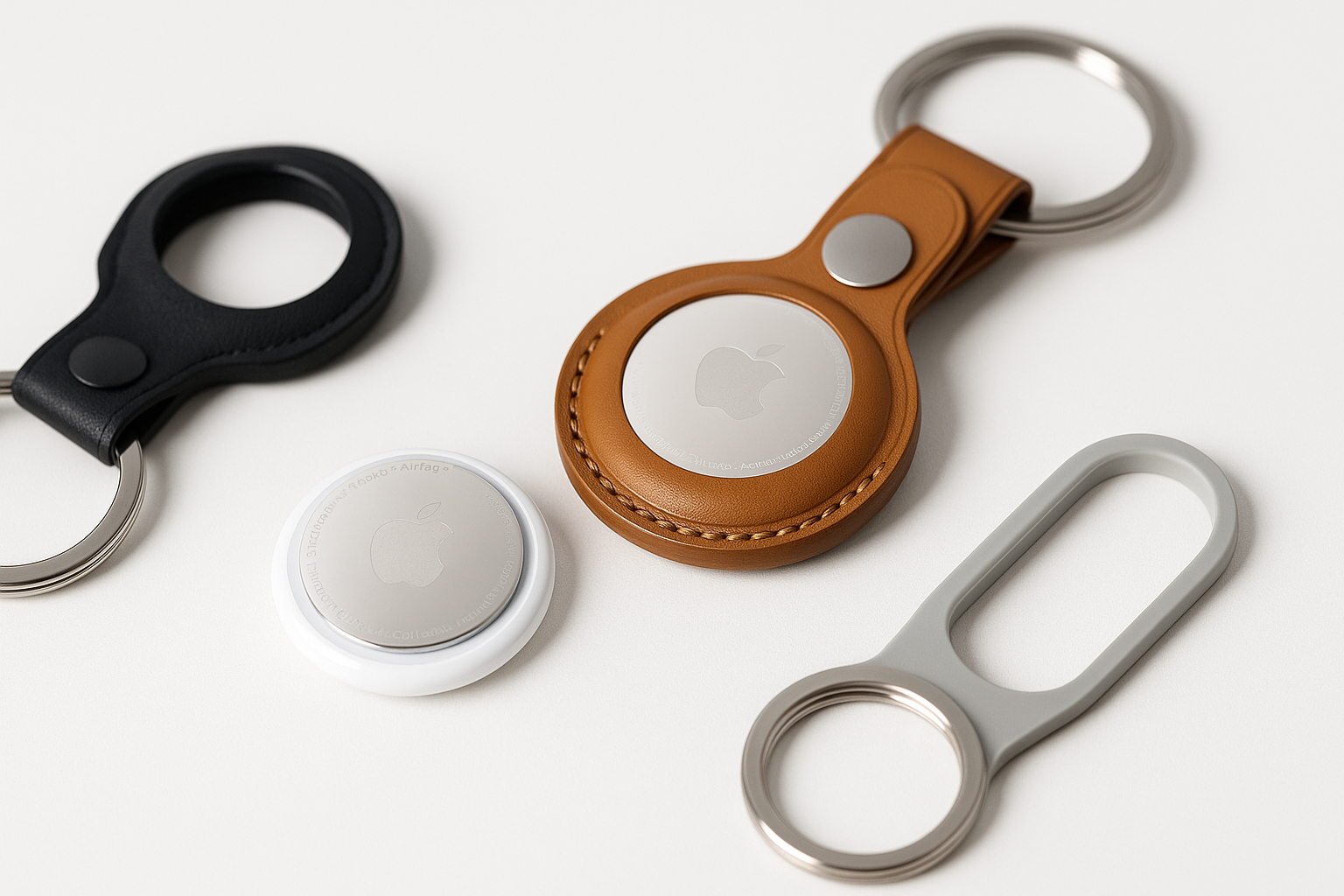
The Apple AirTag (2nd Generation) is Apple’s latest compact Bluetooth and Ultra Wideband (UWB) tracker designed to attach to keys, bags, wallets, and other essentials you do not want to lose. Building on the original AirTag, this model keeps the familiar coin‑shaped design but introduces a second‑generation UWB chip, improved Bluetooth range, and a significantly louder speaker, making it easier to locate nearby items through sound and on‑screen guidance.
It integrates into Apple’s Find My network, leveraging the vast installed base of Apple devices to anonymously relay the location of your item back to you. Setup is intentionally simple: bring the AirTag near your iPhone or iPad, tap to pair, name the item, and you are ready to track. For buyers comparing tracking options at around $24.00, the AirTag (2nd Generation) is clearly positioned as a streamlined, Apple‑centric solution rather than a cross‑platform tracker.
Typical Use Cases
1. Everyday Key and Wallet Tracking
The most common AirTag scenario is preventing the morning “where are my keys?” scramble. Clipped to a keychain or slipped into a wallet or card holder, the AirTag (2nd Generation) is intended to:
- Help you locate misplaced keys around the house or office using sound and Precision Finding.
- Show the last known location on a map when you leave an item behind.
- Alert you if you have enabled notifications for items left behind in certain locations (via the Find My app).
2. Travel and Luggage Monitoring
Another popular use case is placing AirTags in checked baggage, backpacks, or carry‑on bags when traveling. Here it serves to:
- Confirm a suitcase made it onto your flight (or arrived in the same airport).
- Track bags through transfers and layovers, especially during complex itineraries.
- Help you locate luggage on a crowded carousel or in a hotel room.
3. Tracking Bags, Cameras, and Other Gear
For commuters and hobbyists, an AirTag can live in:
- Backpacks or messenger bags used for work or school.
- Camera bags or drone cases with valuable equipment.
- Instrument cases or sports gear bags.
The goal is not anti‑theft protection, but practical help recovering mislaid or briefly lost items in public or semi‑public environments.
4. Shared Household Items
AirTag (2nd Generation) introduces more flexible sharing options, allowing you to share access to an AirTag with multiple people in your household. This is useful when several people regularly need to find the same item, such as:
- Shared car keys.
- A commonly used umbrella.
- Tools or equipment that circulate between family members.
5. Pets and Bikes (With Caveats)
Some owners attach AirTags to pet collars or bicycle saddles for peace of mind. While Apple does not market AirTag as a dedicated pet or bike tracker, realistic expectations include:
- Locating a pet that has slipped out of the yard in a residential area with plenty of Apple devices around.
- Finding a bike misplaced on a large campus or in a crowded bike rack.
This remains dependent on nearby iPhones and is not a GPS tracker with continuous real‑time updates.
Performance in Each Scenario
Everyday Key and Wallet Tracking
Speed and accuracy (nearby searches). When your keys or wallet are somewhere in your home or office, the second‑generation UWB chip enables more precise direction and distance feedback on compatible iPhones and Apple Watches. You see an arrow and distance indicator that updates quickly as you move, generally making it straightforward to home in on an item in another room or under a cushion.
Audio cues. The upgraded speaker is roughly 50% louder than on the original AirTag, making the sound more audible across a typical apartment or house with normal background noise. This improvement matters if you tend to misplace items under piles of clothes, in bags, or behind furniture where direct line of sight is blocked.
Battery life. As with the original model, the AirTag (2nd Generation) is powered by a user‑replaceable CR2032 coin cell battery designed to last more than a year under typical use. The Find My app provides low‑battery alerts, and replacement batteries are inexpensive and easy to swap without tools.
Travel and Luggage Monitoring
Airport and transit environments. In busy airports, AirTag’s performance depends on the density of nearby Apple devices. Because airports are generally rich in iPhones, location updates while bags move through terminals and on tarmacs are often frequent enough to track major steps: check‑in, loading, arrival to baggage claim.
Carousel finding. Once your flight lands, you can open the Find My app to see whether your suitcase has arrived at the same airport and roughly where it is. As your bag approaches and comes within Bluetooth and UWB range, Precision Finding and sound can help you locate it on a crowded carousel.
Limitations for long‑distance tracking. AirTag does not use GPS or cellular connectivity. If your luggage is in a location with few or no Apple devices (e.g., certain remote areas or storage facilities), update frequency drops accordingly.
Bags, Cameras, and Other Gear
For backpacks and equipment bags commonly carried through urban or suburban environments, performance is similar to luggage tracking:
- Frequent enough location updates when in populated areas.
- Reliable nearby locating via sound and Precision Finding in homes, offices, classrooms, or studios.
If you leave a bag at a café or coworking space, another Apple device passing nearby will typically update its location, giving you a map pin to work from.
Shared Household Items
Shared access. With sharing enabled, several family members can see the same AirTag in Find My, receive notifications, and use Precision Finding. This reduces the friction of having one person act as the “owner” responsible for tracking a commonly used item.
Practical impact. In practice, this works best for items that live in and around the home—such as car keys kept near the door, shared outdoor gear, or a family tablet bag—where all users are already signed into their own devices.
Pets and Bikes
When attached to a pet collar or bike, real‑world performance varies widely:
- In dense urban or suburban environments, frequent drive‑bys from iPhone users can keep the location reasonably fresh, helping you recover a bike locked in the wrong area or a pet wandering through the neighborhood.
- In rural areas or sparsely populated parks and trails, updates may be infrequent, making the AirTag less reliable than a dedicated GPS‑based pet or bike tracker.
In all cases, Precision Finding and audio cues only work once you or a family member are physically close to the AirTag—useful for searching a nearby block or backyard, but not a replacement for continuous GPS tracking.
Strengths Across Scenarios
Deep Integration with Apple Devices
Because AirTag (2nd Generation) is designed for the Apple ecosystem, it benefits from:
- One‑tap setup with iPhones and iPads.
- Tight integration with the Find My app you may already use for other Apple devices.
- Precision Finding on compatible iPhones and recent Apple Watch models, giving you visual and haptic guidance right on your wrist.
For users who predominantly own Apple hardware, this integration makes AirTag feel like a natural extension of existing devices.
Expanded Precision Finding Range
The second‑generation UWB chip and improved Bluetooth hardware enable an expanded Precision Finding range—up to around one and a half times that of the original AirTag under ideal conditions. In practice, this means:
- You can start receiving directional guidance from farther away.
- The handoff from approximate location on the map to precise on‑screen arrows happens sooner.
This is particularly helpful in large homes, offices, or parking structures where the original AirTag sometimes felt “blind” until you were quite close.
Louder, More Noticeable Sound
The redesigned, louder speaker addresses one of the most common complaints about the first‑generation AirTag. Benefits include:
- Easier locating of items buried in bags or under furniture.
- Better audibility in noisy environments, such as busy households, offices, or airports.
For many everyday scenarios, the sound alone may be enough to find the item without relying on the precise UWB guidance.
Simple, Replaceable Battery
Sticking with a standard CR2032 coin cell battery is a practical choice:
- No need to send the device in for servicing or recycle it when the battery dies.
- Replacement batteries are inexpensive and widely available.
- Battery swaps are quick and tool‑free.
For an item that is meant to live quietly in the background for years, this is a user‑friendly decision.
Robust Privacy and Anti‑Stalking Measures
Apple builds in several privacy protections, including:
- Automatic alerts if an unknown AirTag appears to be moving with you over time.
- Periodic chimes from AirTags separated from their owners and moving with someone else.
- The ability to identify and disable an unknown AirTag using an NFC‑enabled smartphone.
These measures are designed to reduce the risk of AirTags being misused for unwanted tracking, and they continue to evolve through software updates.
More Sustainable Design
The second‑generation AirTag incorporates a higher percentage of recycled materials and fiber‑based packaging, aligning with Apple’s broader environmental goals. While this does not directly impact day‑to‑day usage, it may matter to environmentally conscious buyers choosing between similar trackers.
Limitations Across Scenarios
Apple‑Only Setup and Best Experience
AirTag (2nd Generation) is fundamentally built around the Apple ecosystem. Key limitations include:
- Setup requires an iPhone or iPad.
- Precision Finding and the full Find My experience are not available on Android.
- Android users can only interact with AirTags in a limited way (for example, checking an unknown AirTag via NFC or using Google’s or Apple’s detection tools), not as full owners.
If you or your family mix iOS and Android devices, competing trackers that support both platforms natively may be more flexible.
Dependent on Nearby Apple Devices
AirTag relies on encryption‑protected Bluetooth signals that are anonymously picked up by nearby Apple devices, not GPS or cellular connectivity. As a result:
- In areas with few Apple devices, location updates can be sparse or delayed.
- For moving items in remote regions—such as a dog wandering through open countryside—an AirTag may not report location frequently enough to be truly reliable.
This is not unique to AirTag, but it is important to understand relative to dedicated GPS trackers that include their own cellular radios and data plans.
Not a Full Anti‑Theft Solution
While an AirTag may help recover stolen items in some cases, it is not designed as a stealth anti‑theft device:
- Privacy features can alert someone that an unknown AirTag is traveling with them.
- A determined thief can remove or disable the AirTag once it is discovered.
It is best thought of as a misplacement and recovery aid rather than a security system.
Requires Recent Software and Hardware for Full Features
Certain capabilities—especially expanded Precision Finding—require relatively recent iPhone or Apple Watch models and up‑to‑date software. Older devices can still use AirTags, but:
- You may not see the enhanced precision range benefits.
- Some of the latest watch‑based finding features will not be available.
Before purchasing, it is worth confirming that your primary iPhone or Apple Watch supports the newest Precision Finding features to fully benefit from the 2nd‑generation hardware.
Form Factor and Accessory Dependence
The AirTag’s coin‑like design is compact but not directly attachable to all items. For many common uses, you may need extra accessories:
- Key rings or loops for attaching to keychains.
- Adhesive mounts or sleeves for bikes or remotes.
- Slim wallets or card holders designed specifically to hold an AirTag.
These add modest extra cost and complexity, especially if you plan to outfit multiple items.
Verdict
The Apple AirTag (2nd Generation) is a thoughtful refinement of Apple’s item tracker, not a radical redesign. The upgraded UWB chip, expanded Precision Finding range, and notably louder speaker address some of the most frequent complaints about the original AirTag, while preserving the simple setup, replaceable battery, and deep Find My integration that made the first model so appealing.
For iPhone and iPad owners looking for an easy way to keep track of keys, wallets, luggage, and everyday bags—especially those already comfortable with the Find My app—the AirTag (2nd Generation) is a strong choice in its class. The experience is purposefully Apple‑centric, and its dependence on nearby Apple devices means it is not a universal solution for every environment or use case. It is also not a dedicated anti‑theft or GPS tracker.
However, if your primary goal is to reduce the time you spend hunting for misplaced items and to add a layer of reassurance when traveling, the AirTag (2nd Generation) delivers meaningful improvements while remaining relatively affordable at $24.00. For most Apple users, it will be the default tracker to consider—and for many, an easy recommendation as the first tracker to buy and the one to standardize on across the household.