
DoHonest Baby Car Camera HD 1080P Review: A Safer Alternative to Backseat Mirrors
Product Context
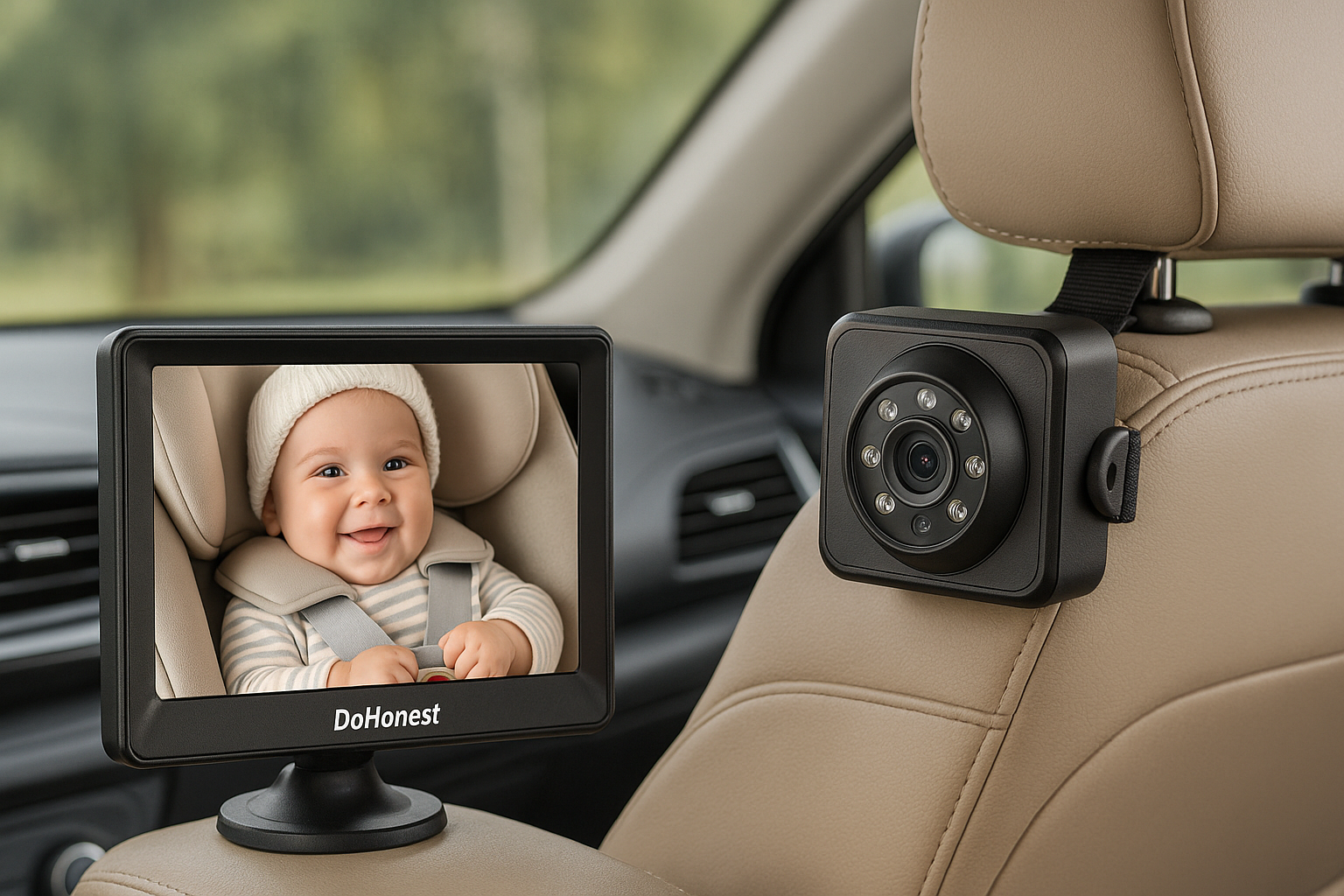
The DoHonest Baby Car Camera HD 1080P (ASIN B0BRTSY1N9) is a dedicated rear-facing baby monitoring system designed to replace traditional backseat mirrors. Instead of relying on a reflection in your interior mirror, it uses a 1080p camera mounted near the rear-facing car seat and a separate in-car display so you can glance at your child much like you would check a backup camera. The system is targeted at parents who:
- Struggle with glare, distortion, or limited viewing angles from standard mirrors
- Want a clearer view of a newborn’s face, breathing, or pacifier position
- Frequently drive at night and need reliable low‑light visibility
- Transport one or more rear-seat children and want to see them without turning around
It competes with other simple car baby monitors and mirrors but stands out by combining HD video, a wide field of view, night vision, and a quick, plug‑and‑play installation that does not require hardwiring.
If you buy it from Amazon, expect typical pricing around $29.98, which places it in the mid-range of dedicated baby car cameras while significantly above basic mirrors.
Feature Breakdown
1080P HD Camera and Wide-Angle Lens
The camera uses a 1080p HD sensor paired with a wide‑angle lens (around 150° on current versions) to capture the entire car seat area and surrounding backseat. In practice, this means you can usually see:
- Your baby’s face and torso in a rear‑facing seat
- Harness position and chest clip location
- Adjacent seating space, often enough for two rear passengers in row two
The high resolution is particularly helpful for quickly confirming whether a baby is awake, sleeping, or has spit up or lost a pacifier, without needing to pull over.
Infrared Night Vision
Infrared LEDs around the camera provide night vision, allowing the system to display a bright, monochrome image in low‑light conditions without shining visible light in your child’s face. The IR LEDs are typically 940 nm, which is less noticeable to babies than older 850 nm emitters.
In very dark cabins, the image shifts to a black‑and‑white view, but detail remains good enough to distinguish breathing movements and head position.
Adjustable Viewing Angle and Mounting
The camera assembly is designed with a large range of adjustability:
- 360° rotation at the camera mount to fine‑tune positioning
- Tilt adjustment to accommodate headrests of different heights and seat recline angles
Strap-based mounting makes it compatible with most front-facing headrests in sedans, SUVs, and minivans. Once strapped on, you can rotate and tilt the camera to center it on the car seat.
The kit includes a dash or windshield mount for the display. That allows you to place the screen:
- On the dashboard near the instrument cluster
- On the windshield similar to a GPS unit
Display and Controls
Depending on the exact kit/variant, the DoHonest baby camera typically ships with a small color LCD display sized for dashboard viewing. Core characteristics include:
- Color daytime image with automatic switch to monochrome for night vision
- Adjustable brightness and (on some versions) contrast and color
- Simple on‑screen menus controlled via buttons on the monitor’s housing
Brightness control is critical, as too-bright displays can be distracting at night. Being able to dim the image helps maintain night‑driving comfort.
Power and Connectivity
The system is designed to be plug‑and‑play:
- Power via the vehicle’s 12 V cigarette lighter outlet or USB (depending on kit)
- A single cable from display to camera (no wireless pairing required)
This approach avoids wireless interference issues seen in some Wi‑Fi or RF baby-cam solutions and reduces lag, but it does mean you need to route and hide a video cable through the cabin.
Performance Insights
Image Quality (Daytime)
During the day, the 1080p resolution delivers a clear, sharp image, especially at the short viewing distance typical inside a car. You can easily see:
- Facial expressions
- If eyes are open or closed
- Whether straps have twisted or slipped below shoulders
Color accuracy is generally good enough to distinguish skin tone from blanket colors and seat fabrics. Wide dynamic range is decent but not on par with premium dashcams; strong backlighting from rear windows can wash out parts of the image. Angling the camera slightly downward and using window shades behind the seat helps.
Image Quality (Night and Low Light)
At night, infrared LEDs illuminate the car seat. The resulting black‑and‑white view looks more like a traditional baby monitor than a mirror, but you gain significantly more detail than you’d have with just interior dome lights.
Some situations where the night vision is particularly useful:
- Early‑morning or late‑evening commutes
- Highway driving without frequent street lighting
- Long road trips when the cabin is kept dark so kids can sleep
Glare from oncoming headlights or tail lights can still cause momentary washout if they hit the camera at a direct angle. Minor repositioning and avoiding pointing the lens straight at rear windows mitigates this.
Latency and Stability
Because the system uses a direct wired connection from camera to display (rather than Wi‑Fi streaming), latency is low and consistent. When you glance over, what you see on the screen is effectively real‑time.
The wired connection is also less susceptible to interference from smartphones or vehicle infotainment systems, which can affect some wireless baby cameras.
Durability and Heat Performance
The camera is designed for continuous in‑car use, with typical operating ranges matching automotive interiors. As with any electronics mounted near windows, prolonged exposure to intense summer heat can eventually affect plastic housings and suction mounts. Removing the display or allowing the cabin to cool on extremely hot days is advisable.
Usability
Installation
For most vehicles, installation is straightforward and tool‑free:
- Mount the camera on the rear-seat headrest using the included strap, tightening it so it doesn’t wobble.
- Route the cable from the camera under seat edges, along door sills, or under floor mats toward the front of the vehicle.
- Mount the display on the dashboard or windshield using the suction or adhesive mount.
- Connect power via the 12 V outlet or USB, and connect the camera cable to the display.
- Adjust the angle while the monitor is on, centering the child’s face in the frame.
Most users should be able to complete installation in about 10–20 minutes, with no need to remove trim panels or access the fuse box.
Everyday Use
In daily driving, the DoHonest system behaves much like a backup camera:
- It powers on when you start the car (if left plugged in)
- The last-used brightness and settings are retained
- A quick glance at the display replaces the old habit of checking a wide-angle mirror
The direct line-of-sight display placement makes it easy to integrate into your normal scan pattern without taking your eyes far from the road.
Compatibility
The camera is best suited for:
- Rear‑facing infant seats in the second row
- Convertible seats used rear‑facing
It can also work with forward‑facing seats or booster seats if you prefer a video view rather than a roof‑mounted mirror, though the product’s design is optimized for rear‑facing use.
Most standard passenger vehicles (sedans, hatchbacks, SUVs, minivans, smaller trucks with back seats) should accommodate the strap‑on camera and dashboard display without issue.
Trade-offs
No baby car camera is perfect, and the DoHonest system introduces several trade‑offs compared with simple mirrors and premium camera systems.
Advantages
- Much clearer view than mirrors: 1080p resolution and night vision provide detail that mirrors cannot, especially in the dark.
- Safer neck and head posture: You can keep your head forward, relying on a quick glance at the display instead of twisting to look back.
- Better low‑light visibility: Infrared illumination means you don’t need to rely on cabin lights, which might disturb a sleeping baby.
- Relatively simple install: No hardwiring, splicing, or pairing; most of the work is just routing a cable cleanly.
- Wide coverage: The wide‑angle lens often covers two adjacent car seats, making it practical for families with more than one child in the back.
Limitations
- More complex than a mirror: There are electronics to power, cables to route, and a display to position. Mirrors remain simpler and maintenance‑free.
- Cabin cable management: Poorly routed cables can be unsightly or become a tripping hazard for passengers entering the back seat.
- Screen glare: In very bright sun or at night if brightness is set too high, screen reflections can be distracting. Some experimentation with placement and brightness may be necessary.
- Not a safety device by itself: It’s a convenience tool to help you check on a child, but it should never replace proper car‑seat installation or safe driving habits.
Value Considerations
At around $29.98, the DoHonest Baby Car Camera sits above simple mirrors but below high‑end multi-camera in‑car monitoring systems. For many parents, the combination of HD video, night vision, and ease of installation represents good value if you:
- Frequently drive alone with an infant
- Do a lot of nighttime driving
- Want peace of mind without turning around or relying on guesswork
If your driving is mostly short, daytime city trips and you’re comfortable with a traditional mirror, the added expense and complexity may feel unnecessary.
Conclusion
The DoHonest Baby Car Camera HD 1080P is a thoughtful upgrade over traditional backseat mirrors, providing a clearer, more consistent view of rear‑facing infants and toddlers. Its 1080p resolution, infrared night vision, and wide‑angle lens make it easy to verify your child’s status at a glance, while plug‑and‑play installation keeps setup within reach for non‑technical parents.
It’s not without compromises: you’ll need to manage cables, find a good mounting location for the display, and fine‑tune brightness to avoid glare. But for caregivers who frequently drive alone, travel long distances, or often drive at night, the added situational awareness and reassurance can justify the cost.
If your priority is maximizing visibility of a rear‑facing child with minimal installation hassle—and you’re comfortable adding a small screen to your dashboard—the DoHonest Baby Car Camera HD 1080P is a strong contender to consider.