
POLDR 12x25 Small Pocket Binoculars Review: Ultra-Compact Optics for Everyday Use
Product Summary
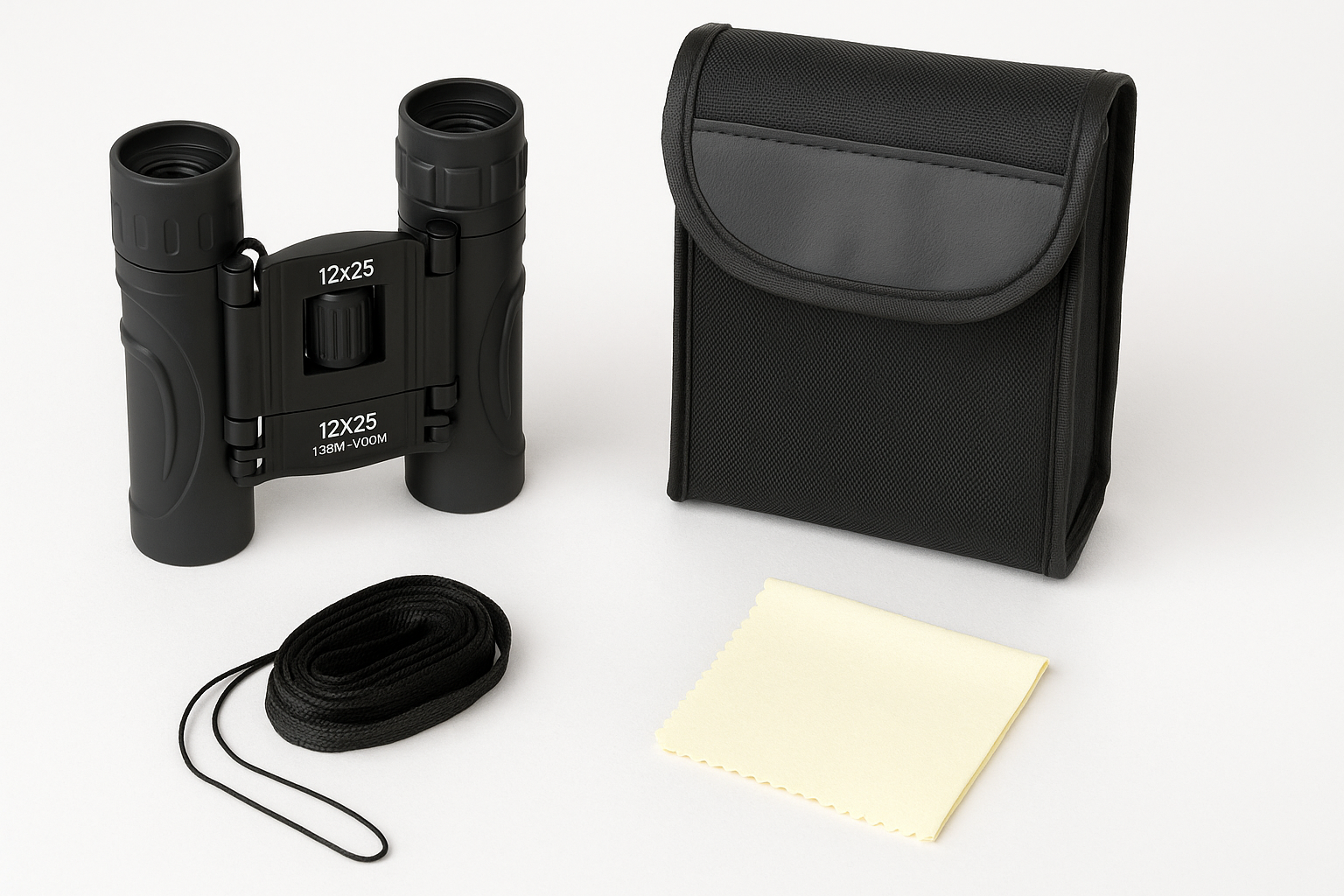
The POLDR 12x25 Small Pocket Binoculars are compact, folding binoculars designed to fit easily into a jacket pocket, small bag, or even some larger pants pockets. They combine a stated 12x magnification with 25 mm objective lenses and a relatively wide field of view (around 126 ft at 1,000 yards) in a lightweight body. Features such as a central focus wheel, right-eye diopter adjustment, and anti-slip exterior make them approachable for beginners and casual users.
On retailers like Amazon, these binoculars are usually found in the entry-level price bracket around $19.99, which positions them as an affordable, grab‑and‑go option for users who want significantly more reach than the naked eye without investing in full‑size optics.
Key Specifications (Typical for This Model)
- Magnification: 12x (nominal)
- Objective lens diameter: 25 mm
- Prism type: Roof prism (commonly BK7 in this price range)
- Coatings: Basic lens coatings for improved brightness and contrast
- Field of view: Approx. 126 ft @ 1,000 yds (about 6°)
- Focus system: Center focus wheel + right-eye diopter ring
- Close focus: Typically several meters (good for general outdoor use, not macro detail)
- Weight: Light and pocketable (often around 160–170 g for this class)
- Design: Folding, pocket-size body with rubberized exterior
Target Users
The POLDR 12x25 Small Pocket Binoculars are best suited for:
- Casual bird watchers and nature observers who want something small to keep in a pocket or daypack for occasional use.
- Concert, theater, and opera goers who want better views of performers from distant seats without carrying bulky gear.
- Travelers and hikers who prioritize light weight and packability over premium optical performance.
- Parents buying for kids who need inexpensive, reasonably robust binoculars that children can handle without too much worry.
- General outdoor users (sports events, sightseeing, stadiums) who want more reach than the naked eye but are not deeply focused on advanced optics.
They are less ideal for users who demand top-tier image quality, wide fields of view, or strong low‑light performance—such as serious birders, hunters at dawn/dusk, or astronomy enthusiasts.
Main Benefits
-
True Pocket-Size Convenience
The biggest strength of these binoculars is how easy they are to carry. The folding design and small 25 mm objectives keep the size and weight very low. They can live in a bag, glove compartment, or coat pocket so they are available when an opportunity appears. -
Higher Magnification Than Many Compacts
The nominal 12x magnification helps bring distant subjects—such as distant birds, players on a field, or performers on a stage—much closer. For casual sightseeing or checking landmarks, this extra reach can be very satisfying, especially compared with low-powered opera glasses. -
Simple, Beginner-Friendly Controls
With a single center focus wheel and a right-eye diopter ring, setup is straightforward: adjust the diopter once to match your eyes, then you only need the center wheel. This is friendly for users who have never owned binoculars before and for kids who might be sharing them. -
Lightweight and Easy for Kids to Hold
The low weight makes them easier for children or smaller adults to hold for short viewing sessions. Combined with a neck strap and included soft case on many listings, they are quick to deploy and put away. -
Budget-Friendly Entry into Binoculars
At around $19.99, the POLDR 12x25 sits in an impulse-buy price range for many buyers. This lowers the barrier to entry for people curious about bird watching, nature observation, or enhancing their experience at events without committing to a more expensive, full-size optic.
Key Considerations
Before choosing the POLDR 12x25, keep these trade‑offs and practical points in mind:
-
Hand Shake at 12x Magnification
Higher magnification tends to magnify hand movements as well. A 12x compact can feel shakier than an 8x or 10x binocular, especially in such a light housing. Some users may need two‑handed support or to rest their elbows on a surface to keep the image steady. -
Limited Low-Light Performance
A 25 mm objective lens in a compact body simply cannot gather as much light as a larger 32 mm or 42 mm binocular. These POLDR binoculars work best in good daylight or well‑lit indoor venues. In early morning, late evening, or dim auditoriums, the image may look relatively dark and less detailed. -
Entry-Level Optical Quality
At this price point, expectations should remain realistic. While the optics can be perfectly adequate for casual viewing, you may notice softening toward the outer edges of the field, some chromatic aberration (color fringing) on high‑contrast edges, and overall clarity that trails behind midrange or premium models. -
Short Eye Relief and Smaller Eyepieces
Compact binoculars often have shorter eye relief than full‑size models. Users who wear glasses may not see the full field of view and might need to experiment with the eyecups pushed down versus partly extended to find a comfortable position. -
Not Designed for Harsh Use or Frequent Professional Fieldwork
The light build and basic sealing make these better suited to casual-day outings than rough backcountry expeditions or professional field research. They typically offer some resistance to minor splashes or light rain but are not meant for prolonged wet conditions.
Pros
- Ultra-compact, folding design fits in small bags and many pockets.
- Very lightweight, comfortable to carry all day or hand to kids.
- High nominal magnification (12x) for bringing distant subjects much closer.
- Simple, intuitive controls with center focus and right-eye diopter adjustment.
- Affordable price point around $19.99, making them accessible as a first pair or backup.
- Versatile use cases: casual birding, travel, sports events, concerts, theater, and general sightseeing.
- Includes basic accessories on most listings (strap, soft case, cleaning cloth) for ready‑to‑use convenience.
Cons
- Higher magnification increases image shake, which may be challenging for some users without support.
- Small 25 mm objectives limit brightness, especially at dawn/dusk or in dim indoor venues.
- Entry-level optical performance: not as sharp, bright, or contrasty as midrange or premium binoculars.
- Field of view narrower than that of many 8x or 10x compact binoculars, which can make tracking moving birds or sports a bit harder.
- Eye relief and eyecup design may not fully accommodate all eyeglass wearers.
- Build quality reflects budget pricing, suitable for light duty rather than intensive, long-term professional use.
Alternatives
If you like the concept of compact binoculars but want to consider other options, here are general categories and what they offer relative to the POLDR 12x25:
-
8x25 or 10x25 Compact Binoculars
- Who they suit: Users who want a steadier image and often more forgiving eye placement.
- Differences: Lower magnification (8x or 10x) usually feels less shaky and often provides a wider field of view. In many cases, these will be more comfortable for extended viewing and for quickly finding a subject, especially birds in motion.
-
Midrange 8x32 or 8x30 Binoculars
- Who they suit: Enthusiasts who value image quality, brightness, and comfort but still want something relatively compact.
- Differences: Slightly larger but still backpack‑friendly, with significantly better brightness and often superior optics. They cost more than the POLDR but represent a strong step up for serious hobbyists.
-
Kid-Specific Binoculars (Lower Magnification)
- Who they suit: Younger children who mainly want to explore the backyard, zoo, or local park.
- Differences: Many kid-focused models use lower magnification (6x–8x) and ruggedized housings with bright colors. They sacrifice reach but are easier for small hands and less likely to be damaged.
When evaluating alternatives, think about how often you will use the binoculars, in what lighting, and for what activities. Occasional concert use may not justify a big investment, while frequent birding or wildlife trips quickly reveal the benefits of larger and higher‑quality optics.
Conclusion
The POLDR 12x25 Small Pocket Binoculars occupy a clear niche: they are affordable, ultra-compact, and simple to use, making them well suited as a first pair of binoculars, a travel backup, or a convenient option to keep in your bag "just in case." Their combination of light weight and 12x magnification can be very satisfying for casual views of distant objects, performers on stage, or landmarks while traveling.
At the same time, potential buyers should recognize the inherent compromises of this form factor and price point: limited low-light performance, increased hand shake at 12x, and only entry-level optical quality. Users who anticipate frequent use, serious bird watching, or demanding lighting conditions may ultimately be happier investing in a slightly larger or higher‑quality binocular.
If your priority is maximum portability and low cost, and you mainly plan to use binoculars in good light for casual viewing, the POLDR 12x25 Small Pocket Binoculars are a practical and accessible option worth considering at around $19.99.