
Canon EOS R6 Mark II (Body Only) Review: A Fast, Full-Frame Hybrid Workhorse
Product Context
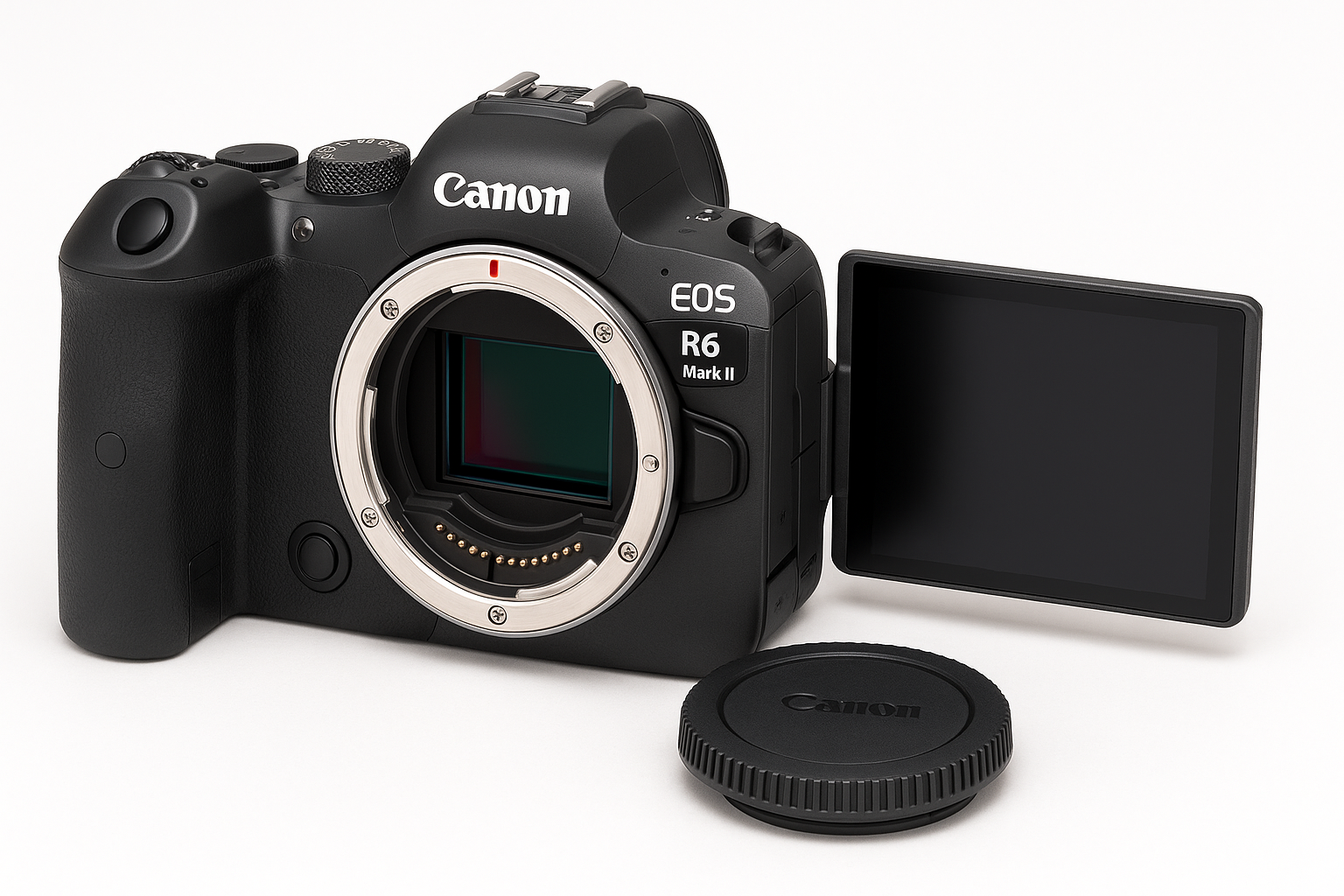
The Canon EOS R6 Mark II Mirrorless Camera (Body Only) is a full-frame RF-mount camera aimed at enthusiast and professional shooters who need a fast, dependable tool for both stills and video. Positioned above entry-level full-frame bodies and below Canon’s high-resolution flagships, it’s a successor to the original EOS R6, bringing a higher-resolution 24.2MP sensor, improved autofocus, and more robust video features.
Because this listing is for the body only, it’s designed for buyers who either already have RF lenses or plan to build a custom kit rather than purchase a bundled zoom. That makes it especially appealing to photographers upgrading from Canon DSLRs via the EF–RF adapter, or to existing RF users who want a capable second body.
In terms of market positioning, the R6 Mark II competes with similar full-frame mirrorless models from Sony and Nikon that target hybrid users who shoot events, weddings, portraits, documentary work, and occasional commercial projects.
If you’re buying through its main listing, you can usually expect street pricing around $1999.00, which places it firmly in the serious-enthusiast range while undercutting some higher-resolution professional bodies.
Feature Breakdown
Sensor and Image Quality
- 24.2MP full-frame CMOS sensor with Dual Pixel CMOS AF II.
- Paired with Canon’s DIGIC X image processor.
- Native ISO range typically stretching from ISO 100–102,400, expandable further for extreme low light.
This resolution is a step up from the original R6’s 20.1MP sensor and hits a practical balance: enough detail for large prints and professional delivery, without generating excessively large files. Color rendition and skin tones are consistent with Canon’s well-regarded output, and dynamic range is competitive for this class.
Autofocus System
- Dual Pixel CMOS AF II with thousands of selectable AF points covering a large portion of the frame.
- Advanced subject detection for people, animals, vehicles, and other moving subjects.
- Eye-, face-, and head-detection modes aimed at portrait and event shooters.
Canon’s AI-driven AF enables sticky subject tracking, especially useful for weddings, sports, wildlife, and fast-moving documentary work. The R6 Mark II can maintain focus accurately in low light and during high-speed bursts.
Burst Shooting and Speed
- Up to 12 fps with the mechanical shutter.
- Up to 40 fps with the electronic shutter.
These speeds make the R6 Mark II highly capable for sports and action, especially when paired with responsive RF lenses. The camera’s buffer and UHS-II SD support allow for sustained bursts in compressed RAW or JPEG, although extremely long bursts will eventually slow as the buffer clears.
In-Body Image Stabilization (IBIS)
- 5-axis in-body image stabilization, rated up to about 8 stops of compensation when paired with compatible RF lenses.
For handheld shooting in low light, IBIS is a major advantage. It helps deliver sharper still images at slower shutter speeds and smoother handheld video footage, especially with non-stabilized prime lenses.
Video Features
- 4K up to 60p using the full sensor width, with oversampling from higher resolution for improved detail.
- Full HD up to high frame rates (for slow motion).
- 10-bit internal recording with Canon Log 3 and HDR options, enabling more flexible grading.
- Option for 6K ProRes RAW output to an external recorder (via HDMI), depending on recorder support.
Canon has worked to reduce or eliminate the overheating constraints that affected early R-series models, enabling longer continuous recording in many modes and making the R6 Mark II more reliable for live events and interviews.
Build, Ergonomics, and Connectivity
- Weather-sealed body with magnesium alloy construction in critical areas.
- 0.5-inch OLED electronic viewfinder with around 3.69M dots.
- 3.0-inch vari-angle touchscreen LCD (approximately 1.62M dots) for flexible shooting angles.
- Dual UHS-II SD card slots for redundancy or overflow.
- Wi‑Fi and Bluetooth for remote control and quick image transfer.
The control layout should feel familiar to Canon DSLR and EOS R users, with a comfortable grip, intuitive menus, and customizable buttons.
Performance Insights
Still Photography
In practice, the R6 Mark II delivers:
- Excellent low-light performance: The combination of a full-frame sensor, fast AF, and effective IBIS makes it strong in dim venues such as receptions, indoor events, and stage performances.
- Good dynamic range: RAW files hold up well to shadow lifting and highlight recovery, suitable for high-contrast scenes like backlit portraits and landscape sunrises.
- Balanced resolution: At 24.2MP, files are detailed enough for large prints and cropping, while remaining efficient for workflow and storage. Wildlife and sports shooters benefit from this balance when they frequently shoot long bursts.
Video Performance
For hybrid creators, the R6 Mark II is a solid video platform:
- 4K oversampled footage looks detailed and clean, with pleasing color and skin tones.
- 10-bit recording with Canon Log 3 gives more flexibility in post-production, especially when matching multiple cameras or grading for a cinematic look.
- Improved thermal management and lack of strict clip-length limits in many modes make it more dependable for interviews, ceremonies, and long-form content.
Rolling shutter is kept reasonably controlled, though fast horizontal pans can still reveal some skew, as is typical in this class.
Usability
Handling and Controls
Canon’s ergonomics remain a strong point:
- The grip is deep and secure, allowing comfortable use with larger RF zooms.
- Dedicated dials for shutter speed and aperture, combined with a rear wheel and joystick, make exposure and AF point changes quick.
- The vari-angle touchscreen is responsive and simplifies menu navigation, focus point selection, and reviewing images.
Photographers moving from Canon DSLRs will find the transition straightforward, while newcomers benefit from a logical control scheme and a well-structured menu system.
Workflow and Storage
- Dual UHS-II SD card slots support simultaneous backup, RAW/JPEG splitting, or video/photo separation.
- Battery life is solid for a mirrorless body, generally adequate for a full day of moderate shooting with power management.
- USB-C and wireless connectivity options support tethering, remote control, and quick sharing, which is useful for social content, client previews, or on-location review.
For Lightroom or other RAW workflows, the 24MP files strike a good balance between quality and editing responsiveness, even on mid-range laptops.
Lens Ecosystem
Because this is an RF-mount body, buyers have:
- Access to Canon’s growing line of RF lenses, from compact primes to professional L-series zooms.
- The option of using existing EF lenses via an EF–RF adapter, often with full AF and stabilization performance, which is valuable for photographers upgrading from Canon DSLRs.
This flexibility softens the cost of transition if you already own EF glass, and gives you room to upgrade lenses over time.
Trade-offs
While the Canon EOS R6 Mark II is a strong all-rounder, there are a few trade-offs to consider:
-
Resolution Ceiling (24.2MP)
For most uses, 24MP is more than sufficient, but high-end commercial, landscape, or studio photographers who rely on heavy cropping or extremely large prints may prefer a higher-resolution body. -
Card and Port Choices
Dual SD UHS-II slots are versatile and affordable, but some competitors offer CFexpress for faster sustained burst and video recording. The R6 Mark II also relies on a micro HDMI port rather than a full-size connector, which some video shooters find less robust. -
No Top-Panel Status Screen
Unlike some higher-end bodies, the R6 Mark II doesn’t include a top OLED info display. Many photographers won’t miss it, but those accustomed to quickly checking settings on the top plate may. -
Price Relative to Entry-Level Full Frame
Even at around $1999.00, this is a meaningful investment. Photographers who shoot only occasionally, or who prioritize maximum resolution per dollar, may find better value in other models or in older-generation bodies. -
Body Only – Lens Costs Separate
Because this listing is for the body only, new RF buyers must also budget for at least one lens. RF glass, especially L-series zooms and primes, can be relatively expensive compared to some DSLR-era options.
Conclusion
The Canon EOS R6 Mark II (Body Only) is a well-rounded, performance-focused full-frame mirrorless camera that targets hybrid photographers and videographers who value speed, reliability, and strong low-light capabilities over extreme resolution.
Its 24.2MP full-frame sensor, high-speed 40 fps electronic burst, effective IBIS, and robust 4K 60p video feature set make it a compelling choice for weddings, events, sports, wildlife, and documentary work. Ergonomics, autofocus performance, and color science are all strong, and the RF ecosystem plus EF compatibility offers plenty of flexibility for lens selection.
Potential buyers should weigh its moderate resolution and reliance on SD cards against their specific needs. If you don’t require ultra-high megapixels or CFexpress-level throughput, the R6 Mark II delivers an excellent blend of image quality, speed, and usability at roughly $1999.00, making it one of the most attractive mid-tier full-frame mirrorless options for serious enthusiasts and working professionals.