
200x25 Compact Binoculars Review: Pocket-Sized Viewing for Casual Adventures
Quick Summary
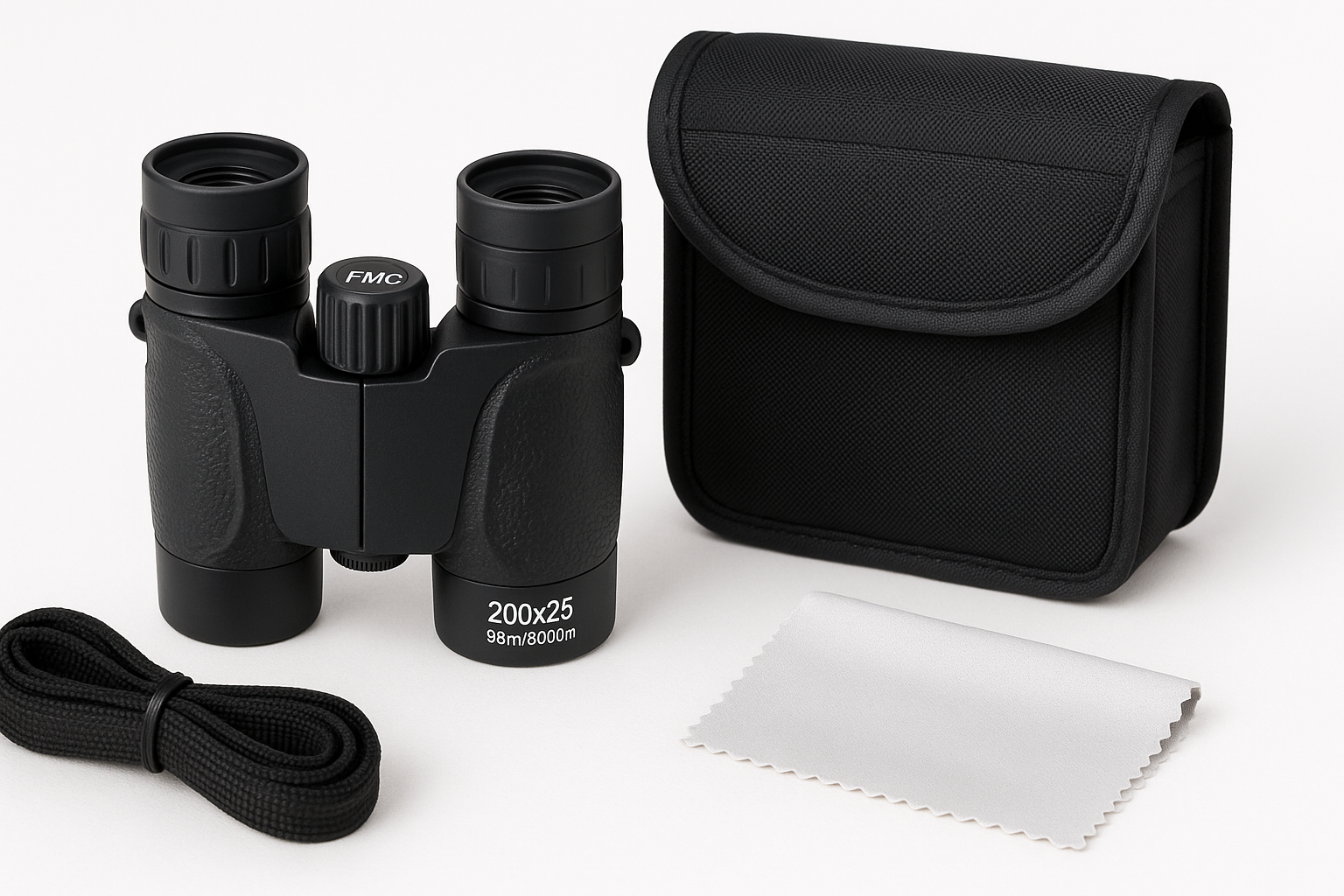
The 200x25 Compact Binoculars for Adults and Kids are tiny, lightweight binoculars marketed for a wide range of uses: bird watching, hunting, concerts, theater, opera, traveling, and sightseeing. They feature a 25 mm objective lens, foldable compact design, and waterproof housing. Their optical system uses FMC multi-coated lenses and BAK4 prisms to improve brightness and sharpness compared with low-end, uncoated optics commonly found in budget pocket binoculars. (fruugo.pt)
They are best suited for:
- Casual users who want a very small, light binocular they can toss into a bag or pocket
- Occasional use at concerts, sporting events, and sightseeing
- Kids and beginners who want something inexpensive and easy to carry
They are less ideal for:
- Enthusiast bird watchers who need wide, bright views and precise color rendition
- Extended glassing sessions (e.g., serious wildlife observation, long hunts)
- Users who need verified, realistic magnification specs
At a budget-friendly price of $19.99, these binoculars offer decent value as an entry-level, ultra-portable option if expectations are kept realistic.
Detailed Analysis
Design and Build Quality
The 200x25 Compact Binoculars are designed around portability:
- Palm-sized footprint: Product dimensions are around 4.45 x 3.11 x 1.93 inches, making them genuinely pocketable for most jackets and small bags. (fruugo.pt)
- Lightweight construction: At about 6.4 ounces (0.4 lb), they are much lighter than standard 8x32 or 10x42 binoculars, making them easy for kids and casual users to hold for short periods. (fruugo.pt)
- Materials: The housing uses ABS plastic and rubber armor, providing basic impact resistance and a more secure grip.
- Included accessories: Typical listings for this model mention a neck strap and soft pouch, which help transport and protect the optics in day-to-day use.
Overall, the build is in line with budget compact binoculars: not premium, but adequate for occasional outdoor use.
Optical Specifications and Realism
The product is advertised as "200x25"—implying 200x magnification with a 25 mm objective lens. In practice, these numbers are more marketing than realistic optical specification.
Optical experts and experienced users consistently note that extremely high magnification (e.g., 40x and beyond) in small-aperture handheld binoculars is neither practical nor credible: the image would be very dim, nearly impossible to hold steady, and typically of very poor quality. (reddit.com)
Based on typical compact designs of this size, as well as similar 25 mm binoculars from other brands, the actual working magnification is likely closer to the 8x–12x range, even if the housing is labeled "200x". While the manufacturer positions this as a "high power" optic, users should treat the printed 200x figure as marketing language rather than a spec comparable to established optics brands.
That said, several optical characteristics are still beneficial at this price point:
- 25 mm objective lenses place the model in the compact category, suitable for daytime and bright conditions but not optimized for serious low-light viewing. (img1.wsimg.com)
- FMC (Fully Multi-Coated) lenses help reduce reflections and improve contrast and brightness versus single-coated or uncoated glass. (fruugo.pt)
- BAK4 prisms are often preferred over BK7 in budget optics because they provide better edge-to-edge illumination and less vignetting when properly implemented. (fruugo.pt)
For casual sightseeing in good light, these elements can deliver a reasonably sharp, usable image, even if they do not match the clarity and color neutrality of higher-end brands.
Focusing and Ease of Use
The binoculars feature:
- Central focus wheel: Used to bring both barrels into focus simultaneously.
- Right-eye diopter adjustment: Allows users to compensate for differences between their eyes, common on most binoculars.
This is a standard configuration and should be familiar to anyone who has used binoculars before. The compact size means the focusing mechanism can feel more sensitive and less refined than that of mid-range models, so some users may need a bit of practice to dial in focus precisely, especially at closer distances.
Waterproof and Outdoor Readiness
The binoculars are described as waterproof, which adds peace of mind in unpredictable outdoor conditions such as light rain, splashes on a boat, or damp environments. While specific IP ratings or gas purging (e.g., nitrogen, argon) are not usually documented for this class of product, the waterproof claim suggests at least basic sealing against incidental moisture.
For casual travel, light hiking, and occasional outdoor events, this level of protection is useful. Serious outdoor enthusiasts, however, may want more robust, documented waterproofing and fog-proofing from established optics brands.
User Experience
Daytime Use (Sightseeing, City Views, Travel)
In bright daylight—city skylines, landscapes, monuments—the 25 mm objectives and coated optics can produce adequately bright and clear images. Their main strength is that they are so small and light that you are more likely to have them with you when a viewing opportunity appears.
The relatively narrow exit pupil compared to larger binoculars (such as 8x32 or 8x42) means these are optimized for good lighting conditions; in cloudy or late-evening scenarios, they will appear dimmer than larger-binocular alternatives. (img1.wsimg.com)
Bird Watching and Nature
For short, casual looks at nearby birds in a park or on a feeder, the binoculars can suffice, especially if your expectations are modest. However:
- The field of view will be narrower than typical 8x models from established brands.
- The small aperture and high claimed magnification make tracking fast-moving birds or scanning dark foliage more challenging.
Enthusiasts often recommend 8x32 or 8x42 binoculars for more serious, comfortable birding due to wider fields of view and better low-light performance. (reddit.com)
Concerts, Theater, and Opera
This is where these binoculars fit particularly well:
- Their compact size makes them discreet and easy to carry into venues.
- They can provide clear enough detail of performers on stage, especially under strong artificial lighting.
Because performances typically occur indoors with mixed lighting, image brightness will not match that of larger models, but for occasional use they are typically adequate.
Kids and Beginners
For children and first-time users, the 200x25 Compact Binoculars offer:
- Lightweight handling that is manageable for small hands
- Simple controls (central focus and diopter ring)
- A low enough cost that accidental drops or rough handling are less worrying compared with premium optics
Parents should supervise younger children, as with any optical device, but the form factor and rugged rubberized housing make this model a reasonable starter option.
Pros
- Extremely compact and lightweight: Easy to slip into a pocket, purse, or daypack; only about 6.4 oz. (fruugo.pt)
- Budget-friendly: Price point of around $19.99 makes it accessible as an entry-level or backup binocular.
- FMC multi-coated lenses and BAK4 prisms: Better optical potential than bare-bones toy binoculars in the same size category. (fruugo.pt)
- Waterproof housing: Adds durability and confidence in light rain or damp conditions.
- Suitable for adults and kids: Simple focusing, light weight, and small size make it user-friendly for a wide age range.
- Versatile everyday use case: From concerts and theater to casual birding and travel, it covers many common scenarios.
Cons
- Questionable magnification claim: The "200x" label is not realistic for a 25 mm compact binocular and should be regarded as marketing rather than a true specification. (reddit.com)
- Limited low-light performance: 25 mm objectives and high claimed magnification make the image noticeably dimmer in dusk, dawn, or heavily shaded areas than in larger binoculars. (img1.wsimg.com)
- Narrower field of view than mid-size binoculars: Makes scanning wide areas or tracking moving wildlife more challenging, especially for beginners.
- Basic build compared to premium brands: While functional, the focusing action and overall finish will not match higher-priced optics.
- Not ideal for serious enthusiasts: Birders, hunters, and dedicated nature observers will quickly run into the limitations of compact aperture and budget optics.
Value Assessment
At a typical price of $19.99 on Amazon, the 200x25 Compact Binoculars position themselves firmly in the budget compact category.
Within this price and size bracket, you are trading optical performance and realism of specifications for extreme portability and low cost. In other words, you are paying primarily for:
- Pocket-sized convenience
- Adequate image quality for casual, daytime use
- Extra features (waterproofing, rubber armor) rarely found on the cheapest toy binoculars
If you are an enthusiast or plan to use binoculars frequently for demanding tasks like serious birding or extended wildlife observation, investing more in a reputable 8x25–8x32 or 10x32–10x42 model will yield a much more satisfying long-term experience. (reddit.com)
If your primary need is a small, low-cost binocular for occasional use—for example, keeping in a glove box, bringing to the occasional concert, or giving to kids as an introductory optic—the 200x25 Compact Binoculars offer reasonable value, as long as you understand their limitations.
Final Thoughts
The 200x25 Compact Binoculars for Adults and Kids fill a niche: they are inexpensive, highly portable binoculars that are easy to bring along when you might want magnified views but do not want to carry bulkier gear.
They deliver acceptable image quality for casual daytime viewing, concerts, and sightseeing, with bonus points for coated optics, BAK4 prisms, and waterproof housing. At the same time, their ambitious 200x magnification claim is not realistic by serious optics standards, and users seeking premium clarity, wide fields of view, and strong low-light performance should look to larger, higher-quality models.
If you approach these binoculars as an affordable, pocketable viewer for occasional fun, rather than a precision optical instrument, they can be a practical and enjoyable choice at their $19.99 price point.